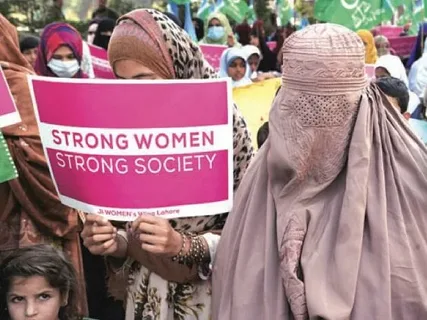
Gender equality Pakistan continues to remain one of the most pressing social and economic challenges facing the country today. Pakistan was recently ranked last among 148 countries in the World Economic Forum’s Global Gender Gap Report 2025, with an overall parity score of just 56.7 percent. The topic has once again come into sharp focus as Islamabad hosted the 9th OIC Ministerial Conference on Women, where officials pledged renewed commitment to closing the gap between men and women.
Background
Pakistan has struggled with gender equality for decades, and the issue is rooted in a mix of cultural, economic, and institutional barriers. Discussions around gender equality Pakistan essay writing, research papers, and academic presentations have grown in schools and universities as awareness spreads among younger generations. Many students search for gender equality Pakistan pdf and gender equality Pakistan ppt materials to better understand the scale of the problem for coursework and debates.
Historically, the gap between men and women in Pakistan has widened rather than narrowed in several key areas. Reports referencing gender equality Pakistan 2021 and gender equality Pakistan 2022 show that the country’s parity score has fluctuated only marginally over recent years, never climbing high enough to escape the bottom of global rankings. This slow pace of progress has made the subject a recurring theme in national policy debates.
Details: The Current State of Gender Equality in Pakistan
According to the World Economic Forum’s Global Gender Gap Report 2025, Pakistan’s gender parity score fell to 56.7 percent, marking the second consecutive annual decline after the country’s best-ever score of 57.7 percent in 2023. This places Pakistan gender equality ranking at the very bottom of the 148 nations assessed, and last among all seven South Asian countries included in the index.
The International Labour Organisation has also reported that women in wage employment in Pakistan earn roughly 30 percent less per month than their male counterparts. This wage disparity reflects a much larger pattern of unequal access to opportunity across the country’s labour market.
One of the more troubling findings highlighted by recent analysis of Pakistan Bureau of Statistics data is that female unemployment tends to rise as women’s education levels increase. In other words, more educated women in Pakistan often struggle harder to find suitable jobs than less educated women, a paradox that experts describe as a serious failure of the labour market to absorb skilled female talent.
By comparison, Bangladesh ranks 24th out of 148 countries in the same 2025 report, making it the best-performing South Asian nation and putting Pakistan’s position into sharper perspective. This regional gap shows that progress on gender equality Pakistan is not simply tied to religion or geography, since neighbouring Muslim-majority nations have achieved far better outcomes.
Causes of Gender Inequality in Pakistan
Understanding the causes of gender equality Pakistan struggles requires looking beyond a single factor. Several interconnected issues contribute to the wide gap between men and women across the country.
Limited access to quality education for girls in rural areas remains one of the biggest barriers, particularly in provinces where cultural norms discourage families from sending daughters to school beyond a certain age. Early and forced marriages further interrupt girls’ education and long-term economic independence.
Weak enforcement of labour laws and workplace protections also plays a major role, leaving many women without safe or fair working conditions. Limited political representation, restricted mobility, and deeply rooted patriarchal traditions add further layers to the problem, making it difficult for policies alone to close the gap quickly.
Quotes: Officials Speak on Women’s Empowerment
Speaking ahead of the OIC Ministerial Conference on Women in Islamabad, Federal Minister for Law and Human Rights Azam Nazeer Tarar described hosting the event as a matter of pride and honour for Pakistan. He said the country would use the high-level forum to highlight government initiatives aimed at women’s empowerment and building a more inclusive society.
Officials at the conference also stressed that men’s active participation is essential for genuine progress, noting that gender equality cannot be achieved by policy alone without a broader shift in social attitudes. Delegates from OIC member states echoed similar sentiments, calling for stronger cooperation to expand women’s roles in education, the economy, and public life.
Impact: What This Means for Pakistan and the Region
The impact of Pakistan’s poor performance in the gender equality Pakistan ranking extends well beyond statistics. Economists have repeatedly pointed out that excluding half the population from full economic participation limits national productivity and slows overall growth.
At the regional level, Pakistan’s position at the bottom of the South Asian gender parity table also affects its standing among OIC member states, many of whom have made faster progress in recent years. This creates added pressure on policymakers to demonstrate real, measurable improvement rather than symbolic commitments.
For ordinary families, the impact is felt in everyday life, from fewer job opportunities for educated women to persistent wage gaps and limited representation in decision-making roles at both local and national levels.
Conclusion: What Comes Next
The Islamabad conference concluded with the adoption of the “Islamabad Declaration,” a shared roadmap intended to guide OIC member states in advancing women’s empowerment over the coming years. Pakistan has also formally taken over the chairmanship of the OIC Ministerial Conference on Women from Egypt for the next two years, a role that will keep the country’s own record on gender equality Pakistan under close international scrutiny.
Whether this renewed attention translates into real change will depend on how consistently Pakistan enforces existing laws, expands access to education, and creates safer, fairer workplaces for women. Many students and researchers continue to explore this topic through a gender equality Pakistan essay, gender equality Pakistan wikipedia entry, or academic gender equality Pakistan ppt presentation, reflecting how deeply the issue has entered public conversation. The coming years will show whether policy commitments made in Islamabad can finally shift Pakistan away from the bottom of the global rankings.
Frequently Asked Questions
What is the current gender equality ranking of Pakistan?
Pakistan ranked last among 148 countries in the World Economic Forum’s Global Gender Gap Report 2025, recording an overall gender parity score of 56.7 percent. This marked the second year in a row that the country’s score declined after reaching its highest-ever level of 57.7 percent back in 2023. The ranking places Pakistan behind every other South Asian nation, including Bangladesh, which ranked 24th in the same report, highlighting just how significant the gap between men and women remains in areas like education, health, economic participation, and political representation.
What are the 7 types of gender inequality?
Gender inequality is generally discussed across several key categories, and while different researchers may group them slightly differently, seven commonly referenced types include: inequality in education, where girls face barriers to schooling; economic inequality, reflected in wage gaps and limited job opportunities; political inequality, seen in low representation in government; health inequality, including unequal access to healthcare; social and cultural inequality, rooted in traditional norms; legal inequality, where laws are unevenly enforced; and household inequality, involving unequal division of domestic responsibilities and decision-making power within families.
What is 5 gender equality?
“5 Gender Equality” refers to Goal 5 of the United Nations Sustainable Development Goals (SDGs), a global framework adopted in 2015 to guide development priorities through 2030. Goal 5 specifically calls for ending all forms of discrimination and violence against women and girls, ensuring equal opportunities in leadership and decision-making, guaranteeing access to reproductive health and rights, and achieving equal access to economic resources such as property, financial services, and inheritance. Pakistan, like other UN member states, has committed to working toward this goal.