
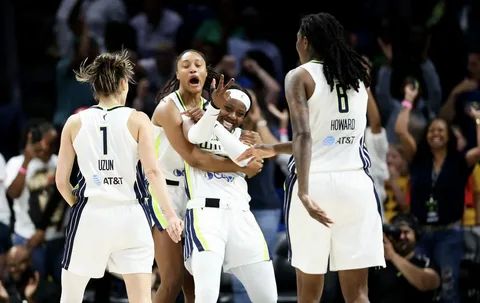

The WNBA’s latest round of player discipline has fans arguing again not just about the incidents themselves, but about how the league is handling them and what it says about the state of the sport right now.
It’s put a spotlight on the usual questions: what counts as a violation, how much responsibility falls on players, and whether the league is being consistent or just reactive.
Background
The WNBA has grown into one of the more closely watched leagues in professional sports, and with that growth comes a lot more scrutiny of every decision it makes player conduct included.
The league has rules meant to keep competition fair and players protected. When something happens on or off the court, officials are supposed to review it before deciding whether to act.
Lately, that’s meant more public conversations about player behavior, social media activity, and how fans and analysts react to it all in real time.
Details of the Current Situation
Recent disciplinary decisions have put the league’s review process under a microscope. Officials typically look at game footage, referee reports, and player statements before deciding on a penalty a process that’s rarely fast enough to satisfy fans who want answers immediately.
Penalties range from warnings and fines up to suspensions, depending on how serious the league judges an incident to be. The stated goal isn’t just punishment — it’s supposed to keep the game fair and players safe, though not everyone agrees the current system does that well.
One thread running through recent coverage is online abuse. Several players have talked about the wave of criticism and hostile messages that follows major league decisions, especially when a call touches a high-profile name. That’s created a real tension: the league wants open discussion of the sport, but not at the cost of players’ safety.
League Rules and Player Responsibility
Like any pro league, the WNBA runs on a rulebook and the disciplinary system exists to protect both the integrity of games and the league’s reputation.
Players are generally expected to stick to standards around:
- On-court conduct
- Respect toward opponents and officials
- Professional behavior more broadly
- What they post on social media
- League policy compliance
Because a suspension or fine can shape how a player is perceived publicly, the league usually puts out some kind of explanation when it makes a major call — though fans often say those explanations could be clearer.
What Officials and the Basketball Community Are Saying
League officials keep emphasizing fairness and accountability as the backbone of the system. Whether that lines up with how individual cases get handled is where a lot of the fan debate actually starts.
Analysts tend to agree on one thing: transparency matters. Fans want to know why a specific penalty happened, not just that it did and vague statements tend to fuel more speculation, not less.
Players themselves have opened up about the pressure of constant public attention, especially as the league’s visibility keeps climbing. That’s a newer dynamic than it might seem a decade ago, this level of scrutiny simply didn’t exist for most WNBA players.
Impact on Women’s Basketball
However you feel about any single decision, the level of attention it’s getting says something bigger: women’s basketball has a real, engaged audience now, with more sponsors and media coverage than the league has ever had.
That visibility cuts both ways. High-profile disciplinary moments shape how people talk about player safety and league culture and how the league responds can either build or erode trust with fans.
More eyes also means more instant reaction. Social media lets both supporters and critics weigh in immediately, which is great for engagement and rough on the players actually living through it.
Global and Regional Reaction
The WNBA’s fanbase isn’t just domestic anymore international basketball fans are following these stories too, particularly as the league keeps expanding its global footprint.
In markets where women’s basketball is still building an audience, how the WNBA handles controversy matters more than it might seem. Fans in those regions are often watching to see whether the league communicates clearly, or leaves people guessing.
At its core, this is part of a bigger conversation across pro sports: how leagues balance accountability, athlete protection, and public interest without picking one at the expense of the others.
What to Expect Going Forward
Expect the league to keep tweaking its approach as it grows consistency and transparency are the two things fans and analysts keep asking for, and it’s an open question whether the WNBA delivers on either.
More disciplinary conversations are coming, basically guaranteed. As the league’s profile keeps rising, so does the scrutiny on every ruling it makes.
Conclusion
This isn’t really about one suspension or one fine. It’s a snapshot of a league trying to manage rapid growth while every decision gets picked apart in real time.
The WNBA is still working out that balance between competition, player protection, and public accountability. How well it communicates through the next controversy will say a lot about where trust between the league, players, and fans is headed.
FAQs
Did Caitlin Clark get fined by the WNBA?
Clark has been at the center of plenty of high-profile moments that draw heavy coverage, but any actual fine or disciplinary ruling only comes from official WNBA announcements. A lot of what circulates online is speculation or conflates criticism with an actual league decision check official sources before trusting a headline.
Who is the transgender player in the WNBA?
The league includes athletes from a range of backgrounds, and questions about transgender athletes usually tie into broader debates over eligibility rules and inclusion policies across sports. For anything specific, the league’s official guidelines are the reliable source, not social media claims.
What does a WNBA referee make?
It varies by experience, role, and how many games they’re assigned. Exact numbers aren’t consistently public, but officiating at this level takes years of training and a deep grasp of the rulebook.