The Zimbabwe climate migration 2021 crisis has not resolved. Families displaced by drought, agricultural collapse, and economic hardship are now facing a second pressure: enforcement actions against the informal settlements where many of them landed after leaving their original homes. People who moved to survive are now being told they cannot stay where they arrived.
That collision between environmental displacement and land-use enforcement is what makes the current situation particularly difficult to navigate for the communities caught in it.
Background
The Zimbabwe climate migration 2021 crisis built over years rather than arriving suddenly. Recurring droughts, irregular rainfall, and declining soil productivity gradually made farming unviable for communities that had depended on it for generations. When harvests fail two or three years in a row, households do not wait for a formal displacement declaration. They move.
The destinations were wherever work or water seemed more accessible urban centers, mining regions, agricultural estates in better-watered areas. Many of these arrivals established informal settlements in places without formal land tenure. That is where the legal complications now begin.
Zimbabwe climate migration PDF research published by development agencies and academic institutions documents this pattern in detail. The movement of people was not chaotic or directionless it followed the logic of survival in an environment where the familiar options had stopped working.
Climate Change and Rural Displacement
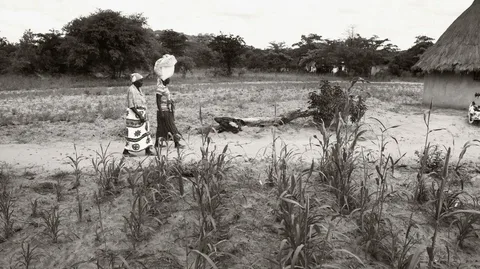
Zimbabwe sits in a region where climate science has documented clear trends: rising average temperatures, more frequent and severe droughts, and rainfall patterns that have become less predictable and less reliable. For subsistence and small-scale commercial farmers, those trends translate directly into production losses.
Agriculture is not a secondary economic activity in rural Zimbabwe for many families it is the only one. When it fails repeatedly, the alternatives available in place are usually inadequate. Migration is not chosen because it is attractive. It becomes the remaining viable option.
Zimbabwe drought displacement connects to the broader Southern Africa climate crisis affecting Zambia, Mozambique, Malawi, and other regional neighbors simultaneously. The migration flows do not follow administrative boundaries, which is part of why managing them requires regional thinking as well as national policy.
Growing Pressure on Climate Migrants
The current concern is not the original displacement. It is what happens next. Informal settlements created by Zimbabwe environmental migration have become targets for enforcement as authorities enforce land-use regulations and address unauthorized occupation of areas that were not formally designated for settlement.
For the families living in those settlements, the prospect of another forced move carries specific consequences. Jobs in nearby areas would be lost. Children in local schools would have to change schools or stop attending. Community connections built over the years since the first displacement would be severed again.
Human rights organizations monitoring the situation have pushed back against the framing of enforcement as routine land administration. Climate migrants did not choose their circumstances. The conditions that drove them from their original homes were not within their control. Treating their arrival in informal settlements as simple illegal occupation without accounting for why they are there misses something important about the nature of the problem.
Why Climate Migration Continues
The factors driving Zimbabwe climate migration are not resolved. Drought conditions persist in affected regions. Water access remains inadequate for farming and household use in large parts of rural Zimbabwe. Economic alternatives for rural communities are limited, and the formal economy has not expanded fast enough to absorb people leaving agricultural areas.
Migration therefore continues as a coping strategy rather than a deliberate choice. That distinction matters for how policy responds. When people are fleeing conditions rather than pursuing opportunity, policies designed to manage voluntary economic migration do not fit.
Multiple Zimbabwe climate migration PDF reports from international organizations including the IOM, UNHCR, and various research institutions have documented this pattern consistently. The evidence base is there. The policy response has not yet matched it in scale or design.
Expert Perspectives
Climate researchers studying Southern Africa are consistent on the direction of travel: without significant intervention in both emissions globally and adaptation locally, the pressures driving Zimbabwe environmental migration will increase. Rising temperatures and more frequent extreme weather events are projected to reduce agricultural viability across a larger area of the country.
Development specialists argue that the response needs to go beyond managing displacement after it happens. Climate-resilient agriculture drought-resistant crops, water-efficient irrigation, soil management practices adapted to changing conditions can extend the viability of communities in place. Improved water management infrastructure, both at community and national level, can reduce the acute water stress that pushes migration timelines forward.
The more nuanced expert position is that climate migration itself is not always a failure. Managed migration where people move with support, land rights, and access to services — can be part of adaptation. The crisis version is when migration happens in the absence of all of that.
Human Stories Behind the Numbers
Every figure in the Zimbabwe climate migration 2021 statistics represents a specific decision made under pressure. Parents who calculated that their children had better chances somewhere else. Farmers who held out through one failed harvest and then another before finally leaving land their families had worked for decades.
Many climate migrants in Zimbabwe describe arriving somewhere unfamiliar with limited resources and no established network — and then building something anyway. The informal settlements that are now under enforcement pressure were not built haphazardly. They represent years of effort to create stability under difficult circumstances.
The cultural dimension of this displacement is easy to underestimate. Leaving ancestral land is not just a logistical change. It means leaving the places where family histories, cultural practices, and community identity are rooted. That loss persists even when the practical situation eventually improves.
Regional Impact
Zimbabwe’s climate migration situation reflects trends running through the entire Southern Africa region. Zambia, Mozambique, Malawi, and parts of South Africa are experiencing overlapping climate pressures that produce similar displacement dynamics.
As migration patterns intensify across the region, they create ripple effects in receiving areas pressure on urban infrastructure, competition for employment, and strain on social services in areas absorbing large numbers of new residents. Regional governments are increasingly examining how to manage this collectively rather than country by country.
The Southern Africa climate crisis is a shared problem that does not recognize national borders in the way that policy responses typically do. Regional frameworks for managing climate-driven population movement are still underdeveloped relative to the scale of what is happening.
Policy Responses and Challenges
The policy challenge is real on multiple sides. Governments have legitimate land administration responsibilities and cannot simply ratify all informal settlement wherever it occurs. But enforcement that does not account for why people are where they are, and that removes them without providing alternatives, does not solve the underlying problem. It relocates it.
Human rights advocates working on Zimbabwe displaced communities have consistently pushed for legal recognition of climate migrants as a distinct category people displaced by circumstances rather than by choice, who require protection and support rather than enforcement.
Finding durable solutions requires what rarely comes easily: coordination between environment ministries, land administration agencies, social protection systems, and international development partners, working around a shared understanding of what the displacement actually represents.
Global Relevance
Zimbabwe’s experience is a specific version of something happening globally. Climate-induced displacement is documented across South Asia, Sub-Saharan Africa, the Pacific Islands, and Central America. The communities affected share similar characteristics: high dependence on climate-sensitive livelihoods, limited financial resilience, and inadequate legal protection when displacement occurs.
The lessons from Zimbabwe climate migration 2021 about what works, what fails, and what the human cost of inaction looks like are directly relevant to how other countries and international institutions design their responses to climate migration.
International climate policy discussions increasingly acknowledge displacement as a central consequence of climate change rather than a peripheral concern. Translating that acknowledgment into funded, operational support for affected communities remains the gap.
Conclusion
The Zimbabwe climate migration 2021 crisis sits at the intersection of environmental change, economic fragility, and inadequate policy response. Families displaced by drought and agricultural collapse are navigating a system that does not have a clear place for them and facing enforcement actions that compound their vulnerability rather than address it.
Long-term solutions require investment in climate resilience, legal frameworks that recognize climate displacement, and social protection systems that reach people before and after they move. The coming years will show whether Zimbabwe and the international community can move from documenting the problem to actually addressing it at scale.
FAQs
How many whites still live in Zimbabwe?
Estimates place the white Zimbabwean population at somewhere between 10,000 and 30,000, though reliable current figures are difficult to establish. The community declined dramatically following independence in 1980 and accelerated further during the land reform period of the early 2000s, when farm seizures and economic collapse drove large-scale emigration. Those who remain are primarily engaged in business, farming on remaining private land, and professional services. The community is significantly smaller than at independence, when white Zimbabweans numbered around 250,000.
Is Zimbabwe an Islamic country?
No. Zimbabwe is constitutionally secular, with freedom of religion protected under its constitution. Christianity is the dominant religion, practiced by the majority of the population across various denominations including Catholic, Anglican, Evangelical, and Pentecostal traditions. Islam is practiced by a small minority, primarily in urban areas and among communities with historical links to traders from the Indian subcontinent and East Africa. Traditional African religious practices also remain significant, particularly in rural communities.
Who is the only billionaire in Zimbabwe?
Strive Masiyiwa is widely recognized as Zimbabwe’s most prominent billionaire-level entrepreneur. He founded Econet Wireless, which grew into one of Africa’s major telecommunications businesses. Masiyiwa has appeared on international wealth rankings and is recognized internationally as a business leader and philanthropist. Whether he is technically the only Zimbabwean billionaire depends on currency, asset valuation methodology, and the specific ranking being referenced wealth estimates vary across financial publications and change with market conditions.