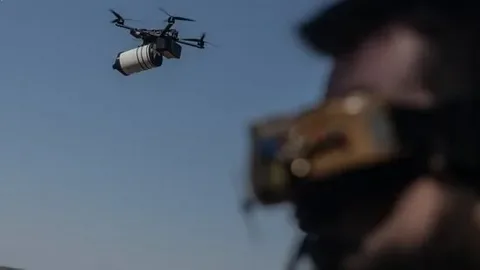
The growing use of Hezbollah FPV drones has drawn international attention to a rapidly evolving battlefield technology that is changing modern warfare. Military analysts say the increasing appearance of drone attack Israel incidents and discussions around fiber optic drone systems highlight how armed groups and national militaries are adapting to new combat realities.
Recent conflicts have shown that relatively inexpensive drones can challenge advanced military systems. As a result, technologies such as the wire-guided FPV drone, Russian fibre optic drones, and the fiber optic drone Ukraine battlefield model are becoming major topics of discussion among defense experts worldwide.
Background
First-person-view drones, commonly known as FPV drones, were initially associated with civilian hobbyists and racing enthusiasts. Over time, military organizations recognized their potential for surveillance, reconnaissance, and precision attacks.
The Russia-Ukraine war accelerated interest in FPV drone military applications. Both sides increasingly relied on drones capable of carrying small payloads and providing real-time video feeds to operators. These developments transformed the battlefield and demonstrated how drone technology could influence military outcomes.
Today, the same concepts are being examined in other conflict zones. The emergence of Hezbollah FPV drones has generated fresh debate about how non-state armed groups may employ advanced drone capabilities in future confrontations.
What Are Hezbollah FPV Drones?
Hezbollah FPV drones refer to unmanned aerial systems reportedly associated with the Lebanese armed group Hezbollah. Analysts believe these systems may be inspired by technological innovations observed in recent conflicts, particularly in Eastern Europe.
Unlike traditional military aircraft, FPV drones are operated through live video feeds transmitted directly to the pilot. This allows operators to navigate with high precision and potentially strike specific targets.
The growing interest in Hezbollah drone footage circulating online has further fueled discussions about drone capabilities and battlefield tactics. While experts caution that online videos should be verified carefully, they acknowledge that drone footage increasingly shapes public understanding of conflicts.
Drone Attack Israel Incidents Draw Attention
The topic of drone attack Israel events has become increasingly prominent as regional tensions continue to evolve. Security officials have repeatedly emphasized the need to counter aerial threats originating from a variety of sources.
Drone technology presents unique challenges because small aircraft can be difficult to detect and intercept. Compared with conventional missiles, drones often fly at lower altitudes and may use routes designed to avoid radar systems.
As a result, governments across the Middle East are investing heavily in counter-drone technologies. The appearance of advanced FPV drone military systems has reinforced concerns about the future security environment.
Russian Fibre Optic Drones Inspire Global Interest
One of the most discussed innovations in modern drone warfare involves Russian fibre optic drones. Unlike conventional drones that rely primarily on radio signals, these systems can remain connected to operators through extremely thin fiber optic cables.
The technology offers several advantages. Most importantly, it can reduce vulnerability to electronic warfare systems designed to jam communications. Because the drone remains physically connected to the operator through a cable, electronic interference becomes less effective.
Military analysts say the success of Russian fibre optic drones in certain battlefield situations has encouraged interest from other actors seeking similar capabilities.
How a Wire-Guided FPV Drone Works
A wire-guided FPV drone operates differently from standard radio-controlled drones. Instead of depending entirely on wireless communications, the drone uses a spool of fiber optic cable that unwinds as it travels.
This connection allows operators to maintain control even in areas where electronic jamming is widespread. The approach has become increasingly attractive in modern conflicts where electronic warfare capabilities continue to improve.
Supporters argue that a wire-guided FPV drone can provide greater reliability under challenging battlefield conditions. Critics, however, note that the cable itself may introduce operational limitations depending on terrain and mission requirements.
Why Fiber Optic Cable for Drones Is Important
The concept of using fiber optic cable for drones has gained attention because electronic warfare is becoming a central feature of modern conflicts. Advanced militaries now routinely attempt to disrupt enemy communications and navigation systems.
Fiber optic cable for drones offers a potential solution to this challenge. Since information travels through a physical cable rather than radio signals, many traditional jamming techniques become less effective.
Experts caution that the technology is not a perfect solution. Nevertheless, it represents a significant step forward in efforts to maintain drone effectiveness in contested environments.
Lessons From the Fiber Optic Drone Ukraine Experience
The fiber optic drone Ukraine battlefield experience has become one of the most closely studied examples of modern drone warfare. Throughout the conflict, both sides experimented with new technologies to overcome electronic warfare challenges.
Reports from the battlefield suggested that fiber optic systems could improve drone survivability and mission success rates in certain situations. These observations attracted attention from military planners around the world.
The lessons learned from the fiber optic drone Ukraine experience continue to influence defense strategies and procurement decisions far beyond Eastern Europe.
Military Experts Weigh In
Defense analysts generally agree that drones are becoming a permanent feature of modern warfare. Many experts believe FPV systems will continue evolving as technology becomes more affordable and accessible.
Some military specialists have argued that future conflicts could see even greater reliance on autonomous and semi-autonomous drone systems. Others emphasize the importance of counter-drone defenses designed to neutralize emerging threats.
According to defense researchers, the rapid pace of innovation means that military organizations must constantly adapt to new technologies and tactics.
Regional and Global Impact
The spread of advanced drone capabilities has implications that extend well beyond any single conflict. Governments around the world are closely monitoring developments involving Hezbollah FPV drones, Russian fibre optic drones, and other emerging technologies.
The increasing use of drones could influence military planning, defense spending, and international security policies. Nations are investing billions of dollars in both offensive and defensive drone technologies.
At the same time, policymakers face questions about regulation, accountability, and the long-term consequences of increasingly sophisticated unmanned systems.
The Future of Drone Warfare
Military observers believe drone technology will continue advancing rapidly over the coming years. Artificial intelligence, improved sensors, and enhanced communications systems are expected to make future drones even more capable.
Innovations involving wire-guided FPV drone systems and fiber optic cable for drones may represent only the beginning of a broader technological transformation. Future battlefields could feature increasingly complex networks of unmanned systems operating alongside traditional forces.
The growing visibility of Hezbollah drone footage and discussions surrounding drone attack Israel incidents suggest that drone warfare will remain a major topic in international security debates.
Conclusion
The rise of Hezbollah FPV drones reflects a broader shift in military technology that is reshaping conflicts around the world. Developments involving Russian fibre optic drones, wire-guided FPV drone systems, and lessons from the fiber optic drone Ukraine battlefield have demonstrated the growing importance of unmanned systems.
As militaries and armed groups continue adopting new technologies, drone warfare is likely to become even more influential. Policymakers, defense experts, and security analysts will continue watching closely as this rapidly evolving field shapes the future of conflict.
FAQs
Did any of Iran’s missiles hit Israel?
During periods of heightened regional tension, some Iranian missiles and drones reportedly reached Israeli territory, while many others were intercepted by air defense systems. The exact number of successful impacts varies depending on the incident and official assessments released after each event. Military analysts continue studying the effectiveness of missile defense networks in responding to these threats.
Is Hezbollah still attacking Israel?
Hezbollah and Israel have experienced multiple periods of cross-border tension in recent years. Reports of military exchanges, drone activity, and security incidents have continued to emerge during times of heightened regional instability. The situation remains dynamic, and developments often depend on broader political and military circumstances across the Middle East.
Did France shoot down an Israeli drone?
There is no widely confirmed evidence that France has recently shot down an Israeli drone as part of a major military confrontation. Claims involving military incidents should always be verified through official government statements and credible international news organizations. Information circulating on social media may sometimes be incomplete or inaccurate.