

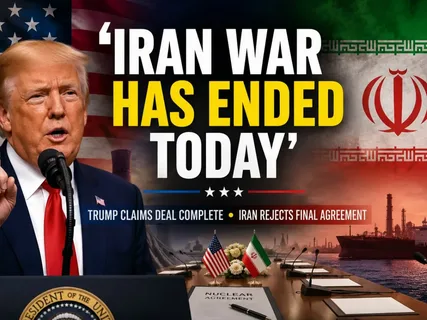

US Iran war news live updates continue to dominate global headlines as tensions between Iran, Israel, and the United States rise sharply across the Middle East. Fresh missile exchanges, military warnings, and emergency diplomatic talks have increased fears of a wider regional conflict.
Breaking news on Iran war developments shows both Washington and Tehran signaling interest in a possible peace agreement, although no official deal has been signed yet. Meanwhile, Iran attack on Israel today update reports suggest ongoing military activity near strategic locations.
Background of the Conflict
The latest Iran breaking news comes after weeks of escalating military and political tensions between Israel and Iran. The situation intensified following reported Israeli airstrikes targeting Iranian military facilities and commanders connected to regional operations.
Iran responded with drone and missile attacks aimed at Israeli defense sites, leading to heightened security alerts across the region. The United States later increased its military presence in nearby waters and activated additional defense systems to protect allies and strategic interests.
The conflict has deep historical roots linked to regional influence, nuclear concerns, and long-standing political rivalry. Analysts say the current crisis is one of the most dangerous moments in Middle East politics in recent years.
Iran Attack on Israel Today Update
According to multiple international reports, Iran launched another wave of missiles and drones toward Israeli territory during the early hours of the day. Israeli defense forces claimed several projectiles were intercepted through advanced air defense systems.
Iran war news Al Jazeera coverage indicated that emergency sirens were activated across major Israeli cities as residents rushed to underground shelters. Several explosions were also reported near sensitive military areas.
Israeli officials accused Tehran of deliberately escalating the conflict and warned that stronger retaliation could follow. Government spokespeople stated that Israel would continue defending its national security against what it called “direct aggression.”
At the same time, Iranian media channels claimed their operations targeted military infrastructure rather than civilian areas. Tehran insisted its actions were defensive responses to earlier Israeli strikes.
US Military Response and Regional Developments
US Iran war news live reports indicate that American forces remain on high alert throughout the Gulf region. Additional naval assets and surveillance systems have reportedly been deployed near critical maritime routes.
US officials urged both Israel and Iran to avoid further escalation while reaffirming support for regional allies. Pentagon representatives said the United States is closely monitoring military movements and preparing contingency measures if the conflict expands.
Breaking news on Iran war developments also revealed that emergency diplomatic communications are ongoing between Washington, European allies, Gulf states, and regional mediators.
Security experts believe the involvement of the United States significantly increases the geopolitical importance of the conflict. Any direct confrontation between Washington and Tehran could impact global energy markets and international security.
Iran Peace Deal Discussions Continue
Despite ongoing violence, discussions surrounding a possible Iran peace deal have reportedly continued behind closed doors. Diplomatic sources suggest international mediators are attempting to push both sides toward temporary de-escalation agreements.
Iran breaking news updates from several regional outlets indicate that Tehran may consider reducing military operations if Israeli strikes stop immediately. However, no official confirmation has been released regarding a finalized agreement.
American diplomats also stated that negotiations remain difficult due to deep mistrust between all parties involved. Analysts say even a temporary ceasefire would require complex security guarantees and international monitoring.
Middle East observers believe the coming days will be critical in determining whether diplomacy can prevent a broader war.
Global Impact of the Conflict
The ongoing US Iran war news live situation has already started affecting global markets and international diplomacy. Oil prices witnessed sudden increases due to fears of supply disruptions in the Gulf region.
Airlines adjusted flight routes while several countries issued travel warnings for citizens in affected areas. International investors also reacted cautiously as uncertainty spread through financial markets.
Regional governments remain concerned that the conflict could involve additional armed groups operating across the Middle East. Countries including Lebanon, Syria, Iraq, and Yemen are closely monitoring developments.
The United Nations called for immediate restraint and warned that further escalation could create severe humanitarian consequences for civilians throughout the region.
Statements from Officials and Analysts
Israeli officials insisted that military operations would continue until security threats are neutralized. One senior defense representative said Israel “will not tolerate attacks on its sovereignty.”
Iranian authorities meanwhile accused Israel of provoking instability and violating international law through targeted strikes inside Iranian territory. Tehran claimed its military actions were proportionate responses.
US officials continued urging restraint from both sides while emphasizing diplomatic solutions. International relations experts warned that miscalculations from either side could rapidly worsen the crisis.
Political analysts also highlighted the importance of backchannel diplomacy involving Gulf states and European mediators. Many experts believe indirect negotiations may still prevent a prolonged military confrontation.
Media Coverage and Information Challenges
Iran news channel coverage and international reporting have become central sources for tracking real-time developments. However, conflicting reports from various outlets have made verification difficult in some cases.
Several social media platforms also experienced a rise in misinformation and unverified videos related to missile strikes and military operations. Experts urged the public to rely on trusted news organizations for accurate updates.
Iran war news Al Jazeera coverage, along with reporting from international agencies, continues to provide detailed updates on military developments, diplomatic negotiations, and humanitarian concerns.
What Could Happen Next?
The next phase of the crisis may depend heavily on diplomatic efforts currently taking place behind the scenes. If negotiations fail, analysts warn that further military escalation could destabilize the entire Middle East region.
Military experts believe additional retaliatory attacks remain possible over the coming days. However, growing international pressure may also push all parties toward temporary ceasefire arrangements.
US Iran war news live coverage is expected to remain one of the most closely followed global stories as governments, financial markets, and civilians monitor every development carefully.
For now, uncertainty continues to dominate the region as world leaders attempt to prevent a wider war while balancing political and military interests.
FAQs
Who is stronger, Iran or Israel?
Both Iran and Israel possess significant military capabilities, but their strengths differ in several areas. Israel has advanced air defense systems, modern fighter aircraft, sophisticated intelligence operations, and strong support from Western allies including the United States.
Iran, on the other hand, has a large missile program, regional proxy networks, drone technology, and significant manpower. Military experts often say Israel has technological superiority, while Iran has broader regional influence and asymmetric warfare capabilities.
The outcome of any direct conflict would depend on international involvement, regional alliances, cyber warfare, and long-term military strategy rather than just military size alone.
Why did Israel attack Iran today?
Israeli officials claim recent strikes targeted Iranian military facilities and commanders connected to regional security threats. According to Israeli statements, the operations were conducted to prevent attacks against Israeli territory and protect national security interests.
Iranian authorities strongly rejected these claims and accused Israel of escalating tensions intentionally. The situation remains highly sensitive, with both sides blaming each other for provoking the latest violence.
International observers believe the attacks are part of a wider struggle involving regional influence, nuclear concerns, and long-standing geopolitical rivalry.
Why is Iran attacking the UAE?
Currently, there is no confirmed large-scale Iranian attack on the UAE linked to the latest conflict. However, tensions in the Gulf region have increased due to concerns about military alliances, security cooperation, and regional political positioning.
Experts note that Gulf states including the UAE often become involved indirectly because of their strategic partnerships with Western countries and regional security arrangements.
Security analysts continue monitoring the situation closely, as any expansion of the conflict beyond Israel and Iran could significantly affect trade routes, oil exports, and regional stability.