

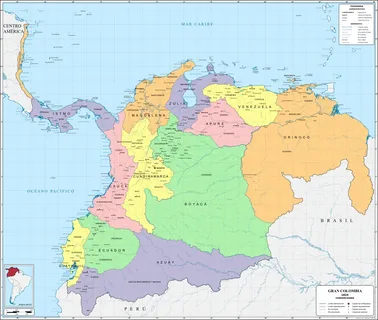

Colombia has returned to the international spotlight following its recent presidential election, sparking renewed interest in the country’s political system and administrative divisions. Many people searching for information about the country often ask questions such as How many States in Colombia, What are the political divisions in Colombia, and whether Colombia is organized in the same way as countries like the United States.
Understanding the Colombia political divisions map is important for anyone interested in Latin American politics, geography, or government. Colombia operates through a system of departments rather than states, with each region playing a significant role in national governance and economic development.
Background: How Colombia Is Organized
Unlike federal countries that are divided into states, Colombia is a unitary republic. This means that the national government maintains significant authority while local governments administer regional affairs.
Many people search online for a List of States in Colombia, but technically Colombia does not have states. Instead, it consists of 32 departments and one Capital District, which serves as the country’s primary administrative framework.
The Colombian system has evolved over decades, balancing centralized authority with local representation. This structure allows departments to manage regional issues while remaining under the broader framework of the national government.
Colombia Political Divisions Map Explained
A Colombia political divisions map displays the country’s 32 departments and the Capital District of Bogotá. Each department has its own governor and local assembly, providing administrative oversight within the region.
The departments vary significantly in size, population, and economic importance. Some are densely populated urban centers, while others contain vast rural areas, forests, and mountain regions.
Geographically, Colombia is divided into several major regions, including the Caribbean region, the Andean region, the Pacific region, the Amazon region, and the Orinoquía plains. These regions influence local politics, culture, and economic activity.
When studying a Colombia political divisions map, one can clearly see how these departments contribute to the country’s national identity while maintaining distinct regional characteristics.
How Many States in Colombia?
One of the most common questions is How many States in Colombia.
The simple answer is that Colombia has no official states. Instead, the country consists of:
- 32 Departments
- 1 Capital District (Bogotá)
The confusion often arises because departments perform many functions similar to states in other countries. They have elected governors, local administrations, and responsibilities related to education, healthcare, infrastructure, and economic development.
Therefore, while people frequently search for a List of States in Colombia, the correct term is departments.
Colombia Departments and Capitals
Understanding Colombia departments and capitals provides insight into how the country is governed locally.
Colombia States and Cities: Understanding the Difference
Searches for Colombia states and cities often reflect confusion between administrative divisions and urban areas.
Departments are administrative units, while cities are population centers located within those departments. For example:
- Medellín is a city within Antioquia Department.
- Cartagena is a city within Bolívar Department.
- Cali is a city within Valle del Cauca Department.
- Barranquilla is a city within Atlántico Department.
The largest cities often dominate regional politics and economic activity, making them influential far beyond their local boundaries.
Colombia Government Structure
The Colombia government structure is based on a presidential democratic republic.The government consists of three branches:
Executive Branch
The President serves as both head of state and head of government. The executive branch is responsible for implementing laws, directing foreign policy, and overseeing national administration.
Legislative Branch
Colombia has a bicameral Congress consisting of:
- Senate
- House of Representatives
Lawmakers debate, amend, and pass legislation that affects the entire country.
Judicial Branch
The judiciary operates independently and includes several high courts that oversee constitutional matters, criminal cases, and administrative disputes.This separation of powers is intended to provide checks and balances within the political system.
Colombia Government Left or Right?
Another common question is Colombia government left or right.The answer depends largely on the administration in power. Colombian politics traditionally featured competition between conservative and liberal political movements. However, modern politics includes a broader spectrum ranging from left-wing to center-right parties.
Recent elections have demonstrated changing political preferences among Colombian voters. Issues such as economic inequality, security, healthcare, education, and environmental protection increasingly influence electoral outcomes.
Political analysts generally describe Colombia as having a diverse political landscape rather than being permanently aligned with either the left or the right.
Impact of Colombia’s Political Structure
Colombia’s departmental system has several important effects on governance.First, it allows regional leaders to address local challenges more effectively. Departments facing different economic or social conditions can pursue policies tailored to their populations.
Second, the structure encourages political representation from across the country rather than concentrating power exclusively in Bogotá.
Third, regional governments help implement national programs in areas such as healthcare, education, transportation, and public safety.As Colombia continues to evolve politically, the relationship between national and departmental authorities remains a central feature of governance.
Why International Interest in Colombia Is Growing
Recent elections have increased global interest in Colombia’s political system. International observers are paying close attention to how the country’s democratic institutions function and how regional governments interact with the national administration.
Economic reforms, security policies, environmental initiatives, and foreign relations are all shaped by the country’s administrative structure. Understanding the Colombia political divisions map therefore provides valuable insight into how decisions are made across the nation.
With growing international engagement and regional influence, Colombia remains one of Latin America’s most important political and economic actors.
Conclusion
The Colombia political divisions map reveals a country organized into 32 departments and a Capital District rather than traditional states. While many people search for How many States in Colombia or a List of States in Colombia, the correct administrative units are departments.
Understanding the Colombia government structure, the List of departments in Colombia, and the relationship between departments and cities helps explain how the country functions politically. As Colombia continues to attract international attention following recent political developments, knowledge of its administrative system remains essential for understanding its future direction.
FAQs
What are the political divisions in Colombia?
Colombia is divided into 32 departments and one Capital District known as Bogotá. These departments function as the primary administrative units of the country and are governed by elected governors and local assemblies. Each department manages regional affairs while operating within Colombia’s national legal framework.
What is the political structure of Colombia?
Colombia is a presidential democratic republic with executive, legislative, and judicial branches. The President leads the executive branch, Congress handles legislation through the Senate and House of Representatives, and an independent judiciary oversees the legal system. The country follows a unitary system rather than a federal one.
Is Colombia divided into 32 departments?
Yes. Colombia is officially divided into 32 departments along with the Capital District of Bogotá. These departments serve a role similar to states in some countries, although Colombia does not officially use the term “state” for its administrative divisions.