The US blockade of Iran has turned one of the world’s most critical waterways into a flashpoint. On 13 April 2026, the United States imposed a naval blockade on Iran following the failure of the Islamabad Talks to end the 2026 Iran war, with the US military deploying over 10,000 personnel, more than a dozen warships, and dozens of aircraft to enforce it. With the Strait of Hormuz effectively shut, global energy markets are in turmoil and Pakistan has emerged as the world’s most unlikely peacemaker.
Background How the 2026 Iran War Started
The roots of this crisis go back to failed diplomacy. The 2026 conflict followed the failure of indirect talks between the US and Iran, after the October 2025 triggering of snapback sanctions against Iran under the 2015 nuclear deal by the UK, Germany, and France.
On 28 February 2026, Israel and the United States began a series of strikes against Iran, saying they aimed to induce regime change and target its nuclear and ballistic missile programme. Iran’s Supreme Leader Ali Khamenei was killed in the strikes.
Iran did not stay silent. It launched a wave of counter-strikes across the region and made a move that sent shockwaves through global markets closing the Strait of Hormuz.
Is the Strait of Hormuz Open Today?
This is the question every energy importer is asking. The short answer: barely, and under extreme tension.
Before the conflict, around 3,000 vessels used the strait each month. Their numbers now stand at around 5% of this level. This has pushed up global oil and gas prices, benefiting both Russia and, temporarily, Iran.
International benchmark Brent crude prices rose to nearly $100 a barrel, while the US oil contract West Texas Intermediate surged to $105.50 a barrel, as investors braced for further disruptions to supplies through the strait.
Any Strait of Hormuz map today shows a waterway that is technically open but practically paralyzed a chokepoint for roughly 20% of the world’s seaborne oil trade, now held hostage by geopolitics.
The US Blockade of Iran What It Means
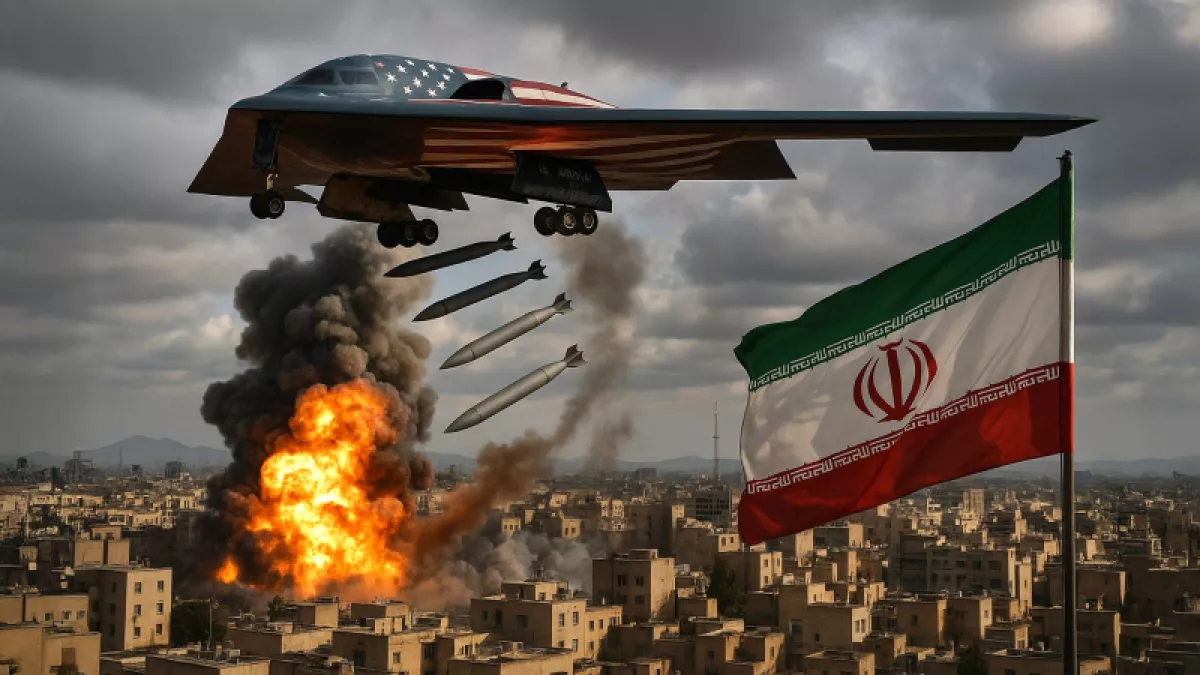
The US blockade took effect at 10 a.m. ET on 13 April 2026, under the command of Admiral Brad Cooper at US Central Command, and was set to encompass the entirety of the Iranian coastline. Any vessel entering or departing the blockaded area without authorization was declared subject to interception, diversion, and capture.
In the first 24 hours after the blockade began, six commercial ships complied with orders and were redirected back to Iranian ports. By 18 April, the US had intercepted a total of 23 vessels, though at least 26 ships had managed to bypass the blockade in both directions.
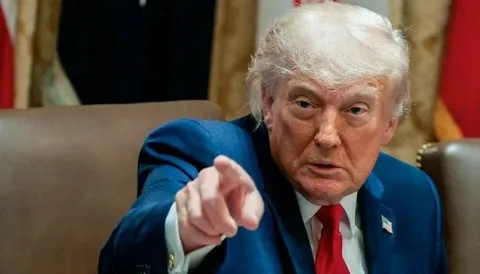
On 22 April, US President Donald Trump claimed that the naval blockade was costing Iran $500 million daily, while the US Department of Defense estimated Iran had lost $4.8 billion in oil revenue by 1 May.
Is China Still Getting Oil From Iran?
Despite the US blockade of Iran, China has continued to receive Iranian oil through various channels though not without consequences.
China had developed extensive ties with Iran before the war, importing more than 80% of Iran’s shipped oil and providing technological support, including radar systems and navigation tools.
In April 2026, the US sanctioned one of China’s largest refineries for processing Iranian crude oil, the Hengli Petrochemical Dalian Refinery Co. The US also accused Chinese state-owned firms of providing chipmaking tools to Iran’s military, and alleged that Chinese companies marketed geospatial intelligence about the positions and movements of US forces in the region.
China officially denied all military assistance claims and declared itself neutral but the dual-use technology trail tells a more complicated story.
Pakistan Stops Iran War The Unlikely Mediator
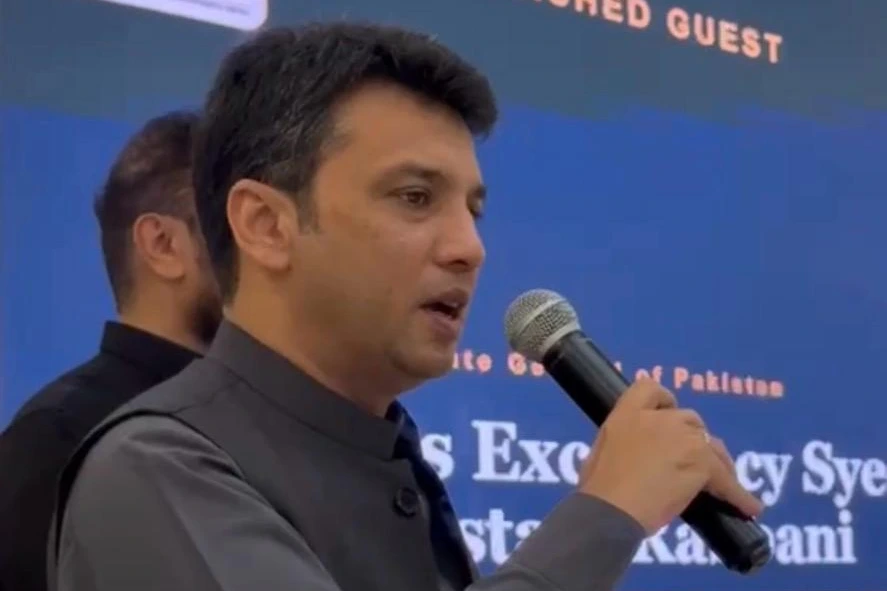
Perhaps the most remarkable story of this crisis is how Pakistan positioned itself as the one country that could bring the US and Iran to the table.
Trump said he agreed to the ceasefire “based on conversations with Prime Minister Shehbaz Sharif and Field Marshal Asim Munir of Pakistan,” adding that they had “requested that I hold off the destructive force being sent tonight to Iran.” Iranian Foreign Minister Araghchi praised Pakistan, saying Iran had accepted the ceasefire “in response to the brotherly request of PM Sharif.”
Pakistan’s border with Iran stretches nearly 1,000 kilometers. A full-scale US-Iran war would directly spill over to destabilize Pakistan’s border regions and national security. Additionally, approximately 5 million Pakistani citizens work in the Gulf region, with remittances forming a vital pillar of Pakistan’s foreign exchange earnings.
For Pakistan, stopping this war was not just diplomacy it was survival.
The Islamabad Talks So Close, Yet So Far
The Islamabad Talks lasted 21 hours between 11 and 12 April 2026, consisting of three rounds the first indirect, the second and third direct. The US 300-member team was led by Vice President JD Vance alongside envoys Steve Witkoff and Jared Kushner. The Iranian 70-member team was led by parliamentary speaker Mohammad Bagher Ghalibaf and Foreign Minister Abbas Araghchi.
The talks ended with no agreement reached and no MoU issued. The main unresolved issues included Iran’s nuclear program and the status of the Strait of Hormuz. Iran demanded comprehensive lifting of sanctions as a precondition, while the US insisted on phased relief linked to compliance.
Iran’s Foreign Minister later said the two sides were “inches away from an MoU” but inches, in this conflict, is still a world apart.
Quotes What World Leaders Are Saying
Trump has called Pakistan’s army chief Asim Munir his “favorite field marshal,” as well as “a great fighter” and “a very important guy,” signaling the personal rapport that has made Pakistan’s mediation possible.
Iran’s Foreign Minister Abbas Araqchi stated that Tehran intends to “devise a new arrangement to ensure secure maritime traffic through the waterway” a signal that Iran is open to a negotiated settlement on the Strait of Hormuz, but on its own terms.
A confidential CIA analysis concluded that Iran can survive the US naval blockade for at least three to four months before facing more severe economic hardship a finding that raises serious questions about how quickly Trump’s strategy can force a resolution.
Global and Regional Impact
The effects of the US blockade of Iran and the Strait of Hormuz closure are reverberating worldwide.
Pakistan imports more than 85% of its crude oil from Saudi Arabia and the UAE via the Strait of Hormuz. Although Islamabad secured a special deal with Iran to transit its crude oil through Hormuz even when it was closed for most of the world, global oil prices surged a huge blow to Pakistan’s economy affecting both the energy and agriculture sectors.
The 32 members of the International Energy Agency, including the UK, released 400 million barrels of oil in an attempt to stabilize global energy markets. Several Arab states were forced to cut or suspend oil production due to Iranian counter-strikes.
The Iran war Pakistan connection is not just diplomatic it is economic, geographic, and deeply personal for millions of people.
Conclusion What Comes Next?
The US blockade of Iran and the paralysis of the Strait of Hormuz represent one of the most dangerous geopolitical moments of the decade. Reestablishing freedom of navigation in the Strait of Hormuz is widely seen as a substantial issue in ongoing talks, and neither side has removed its blockade as of now.
Pakistan has emerged as an unlikely but indispensable mediator, hosting high-level talks in Islamabad and shuttling proposals between the two sides a remarkable role change for a country that had long been viewed through the lens of regional instability.
The world is watching. If diplomacy fails, the consequences for oil markets, for regional security, and for millions of ordinary people from Karachi to Beijing will be severe and lasting.
FAQs
Why did Trump bomb Iran in 2026?
On 28 February 2026, Israel and the United States began a series of strikes against Iran, saying they aimed to induce regime change and target its nuclear and ballistic missile programme. The conflict followed the failure of indirect talks and the October 2025 triggering of snapback sanctions against Iran under the 2015 nuclear deal. Iran’s nuclear enrichment to near weapons-grade levels was the core trigger for US military action.
Is the Strait of Hormuz closed?
The strait remains in a state of severe disruption. Before the US-Israel strikes, around 25% of the world’s seaborne oil trade and 20% of the world’s liquefied natural gas passed through the Strait of Hormuz. Iran blocked the strait following the February 2026 strikes, and the US followed with its own counter-blockade targeting ships seeking to reach Iranian ports. While a fragile ceasefire has technically allowed some traffic, the waterway is effectively near-closed for normal commercial operations.
Who is the No. 1 army in the world?
By most standard military assessments, the United States holds the top position globally, based on defense budget, technological capability, global force projection, and nuclear arsenal. The US deployed over 10,000 personnel, more than a dozen warships, and dozens of aircraft just to enforce the Iran naval blockade alone a demonstration of unmatched operational reach. However, China’s rapidly modernizing military is widely considered the closest competitor, while Russia retains a large nuclear force. No single index is universally agreed upon, and rankings vary depending on the metrics used.