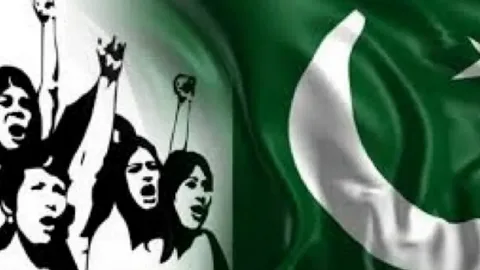
Pakistan’s Senate committee has recently approved a bill aimed at ensuring 33 percent representation for women in federal bodies. This move has reignited the national debate around Pakistan gender equality legislation and women protection laws in Pakistan. While legislators and rights groups have welcomed the step, the ground reality remains starkly different from what the law promises.
Background
Pakistan has a long, uneven history with gender equality legislation. From the Muslim Family Law Ordinance of 1961 to the Women’s Protection Bill of 2006, legislation to protect women in Pakistan has seen multifaceted aspects since independence, with Pakistani women given suffrage from the very beginning
However, the Zia era set the clock back. The Hudood Ordinance badly disrupted the equilibrium between men and women in society, causing an upsurge of discrimination widely protested by women’s rights activists across the country.
Since then, Pakistan has been slowly reclaiming lost ground through constitutional guarantees and new legislation though progress remains inconsistent.
Constitutional Foundation
The Constitution of Pakistan 1973 forms the legal backbone of Pakistan gender equality legislation. Article 34 of the Constitution emphasizes full participation of women in national life, stating that “Steps shall be taken to ensure full participation of women in all spheres of national life.”
Additionally, Article 17(2) provides every citizen with the right to form or be a member of a political partya provision that applies equally to women, yet remains poorly implemented in practice.
These constitutional commitments have driven much of the Pakistan gender equality legislation 2020, Pakistan gender equality legislation 2021, and Pakistan gender equality legislation 2022 reforms seen in recent years.
Key Women Protection Laws in Pakistan: 2020–2022
The years 2020 to 2022 saw a notable wave of laws passed for women’s rights in Pakistan. These pieces of Pakistan gender equality legislation represent some of the most significant legal advances in decades.
2020 Legislation
The Zainab Alert, Response and Recovery Act, 2020, and the Legal Aid and Justice Authority Act, 2020, were among landmark pieces of legislation passed to protect the rights of women and children.The Zainab Alert Act specifically established a dedicated agency to track and recover missing and abducted children a direct response to a horrific case that shook the nation.
This forms a critical part of Pakistan gender equality legislation 2020, addressing child safety and legal access simultaneously.
2021 Legislation
Pakistan gender equality legislation 2021 brought several transformative laws. The Anti-Rape (Investigation and Trial) Act, 2021, and the Enforcement of Women’s Property Rights (Amendment) Act, 2021, were enacted as part of a broader drive to strengthen human rights protections.
The Criminal Law (Amendment) Act, 2021, was also passed to effectively tackle the widespread instances of rape and sexual abuse of women and children.
These additions to women protection laws in Pakistan signaled a serious legislative commitment, even if enforcement lagged behind.
2022 Legislation
Pakistan gender equality legislation 2022 reached a new benchmark with workplace protections. The Protection against Harassment of Women at the Workplace (Amendment) Bill, 2022, enacted on January 14, expands the definition of workplaces to encompass both formal and informal workplaces.
The new legislation specifically includes domestic workers, who are often isolated and marginalized, and as a result can be at greater risk of workplace violence and harassment.This was a crucial addition to women protection laws in Pakistan, recognizing that millions of women work in informal and domestic settings with little legal cover.
The 33% Representation Bill: What It Proposes
The recently Senate-committee-approved bill is being seen as a major step in Pakistan gender equality legislation. The bill proposes a minimum allocation of 10 percent general seats for women and a 33 percent quota of women in general councils. The bill states that every political party should have a minimum of 33 percent quota for women in the party’s elected general council and in any associated party committee at the federal, provincial, and local levels.
This mirrors the global push toward the 40-40-20 gender diversity standard and aligns Pakistan more closely with UN-recommended representation targets in women protection laws in Pakistan.
Women’s Performance in Parliament: The Case for More Seats
The argument for expanding Pakistan gender equality legislation is not just moral it is backed by hard data. Despite making up just 17% of the National Assembly and Senate, women MPs accounted for nearly 49% of the parliamentary agenda in 2024–25, a historic high since 2015–16.Women legislators focused on diverse issues including institutional accountability, climate resilience, economic inequality, human rights protections, and healthcare reforms.Female MNAs averaged 17 agenda submissions each, more than five times the male average, and showed higher engagement in parliamentary proceedings.
This data strongly supports expanding the scope of laws passed for women’s rights in Pakistan. Their contribution far outweighs their numbers.
Expert Voices and Official Statements
The case for stronger Pakistan gender equality legislation is being made loudly within parliament itself. Dr Shahida Rehmani, Secretary of the Women’s Parliamentary Caucus, stated at a recent national forum, “Despite the 5.0 per cent quota requirement under the Elections Act 2017, compliance remains weak.”
She added that the underrepresentation of women reflects “not just underrepresentation but active gatekeeping within party structures” a damning assessment of political will behind Pakistan gender equality legislation.
Pakistan ranks the lowest among 148 countries in the Global Gender Gap Index 2025, despite repeated constitutional and legal emphasis on women’s political participation.
The Gap Between Law and Reality
Despite the progress in Pakistan gender equality legislation 2020, Pakistan gender equality legislation 2021, and Pakistan gender equality legislation 2022, a wide gap remains between legislation and lived reality.
Despite significant legislative advancements like the Protection of Women from Violence Act 2016 and the Anti-Rape Ordinance 2020, Pakistani women continue to face significant barriers to equality and justice.
Gender-based violence is underreported, with reasons including fear, shame, and lack of trust in the justice system.
Women protection laws in Pakistan are only as strong as their enforcement and enforcement has long been the weakest link. Rural areas lack legal aid centers, police sensitivity training is minimal, and social stigma continues to silence victims.
Regional and Global Impact
Pakistan’s progress or lack thereof on gender equality legislation is watched closely by the international community. According to the Inter-Parliamentary Union ranking, Pakistan ranks 100th in the list of 190 countries in terms of representation of women.
The 33% women seats bill, if passed into law, would be a significant signal to international bodies and trading partners that Pakistan is serious about aligning with global standards of Pakistan gender equality legislation.
It would also affect regional dynamics in South Asia, where neighboring countries like India and Bangladesh have also struggled with similar representation gaps.
Conclusion
Pakistan’s journey on gender equality legislation is one of persistent effort against structural resistance. The Senate committee’s approval of the 33% women seats bill is a welcome development. Yet Pakistan gender equality legislation 2022, Pakistan gender equality legislation 2021, and Pakistan gender equality legislation 2020 as impressive as these laws are on paper have shown that legislation alone does not transform society.
True equality demands enforcement, education, political will, and cultural change. Until political parties genuinely commit to women’s participation and law enforcement agencies implement women protection laws in Pakistan with accountability, Pakistan’s gender equality promise will remain more aspiration than reality.
Frequently Asked Questions (FAQs)
Q: What is Article 37 of the Constitution of Pakistan?
Article 37 of the Constitution of Pakistan falls under the Principles of Policy. It directs the state to promote social justice and eradicate social evils. It includes provisions to reduce illiteracy, provide free and compulsory secondary education, ensure just and humane working conditions, reduce disparity in income, and eliminate riba (interest). While not exclusively about gender, Article 37 supports the broader framework of Pakistan gender equality legislation by mandating a just social order.
Q: What is 40-40-20 gender diversity?
The 40-40-20 gender diversity rule is an internationally promoted standard that recommends a balanced representation across genders in organizations, governing bodies, and workplaces. It typically means 40% women, 40% men, and 20% flexible (non-binary or any gender). This standard is referenced in discussions around Pakistan gender equality legislation and the push for 33% women’s seats in federal bodies which is seen as a step toward this global benchmark.
Q: What is Article 26 in Pakistan?
Article 26 of the Constitution of Pakistan guarantees non-discrimination in access to public places. It states that no citizen shall be denied access to any public place, entertainment, resort, or educational institution maintained by the state on the grounds only of race, religion, caste, sex, residence, or place of birth. This article is a foundational pillar of women protection laws in Pakistan and directly supports gender equality in public life, education, and civil participation.