
Bahrain is a small island nation in the Persian Gulf, but its military significance is enormous. It is home to the US Navy’s Fifth Fleet one of the most powerful naval commands in the world.
Bahrain is the home of the Navy’s 5th Fleet, making it a central hub for providing maritime security in the Middle East region, including protecting commercial shipping. The country sits roughly 124 nautical miles away from the coast of Iran, placing it well within range of Iranian drone and missile strikes.
When the US and Israel launched joint strikes on Iran on February 28, 2026, it was only a matter of hours before the Iranian military retaliated and Bahrain’s naval base became an immediate target.
Around 8,000 US military personnel were stationed at the base in Bahrain before the attacks on Iran began on February 28.
The Attack: Iranian Military Hits Bahrain Naval Base
The Iran war news from Bahrain was alarming from the very first day. Iranian missiles and drones rained down on one of the most important US military installations in the world.
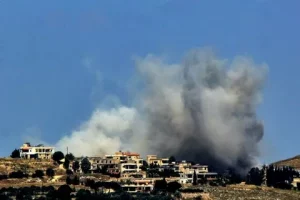
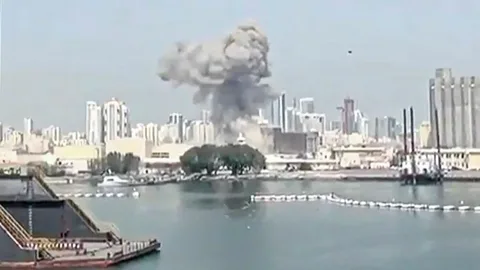
Iranian missiles and drones struck the headquarters of US Naval Forces Central Command, as well as residential buildings elsewhere in the island nation. Shortly after the US announced major combat operations in Iran, military personnel and residents were warned about an incoming missile attack. Within minutes, explosions were heard across the city and plumes of smoke rose from the US base.
The scale of the Bahrain naval base attack was staggering. On February 28, 2026, Iran conducted retaliatory missile and drone strikes on Bahrain, hitting multiple buildings in the capital Manama including the district of Juffair, where the US Navy’s 5th Fleet is headquartered at Naval Support Activity Bahrain.
Iran’s Revolutionary Guard claimed it destroyed the command building and headquarters of the US air base in Bahrain, saying 20 drones and three missiles hit the intended targets, destroying the command building and setting fire to its fuel tanks.
Bomb Threat Turns Real: What Happened on the Ground
The bomb threat that military families had feared became a terrifying reality in a matter of hours. Eyewitness accounts described the chaos as Iranian drones filled the skies over Manama.
An American connected to the US military base in Bahrain described the experience: “When the drones came, they sounded like lawnmowers or mopeds, and so loud it was like they were right outside. It sounded relentless.” Iranian drones and missiles began hitting facilities in Bahrain roughly two hours after the first US and Israeli strikes on Tehran.
The US Embassy issued a shelter-in-place order and warned that “even if the incoming missile or drone is intercepted, falling debris represents a significant risk.” US Navy Central Command told all servicemembers and contractors that the Juffair area was “no longer assessed as safe for US personnel.”
The Bahrain Defence Force said its air defense systems successfully intercepted hostile Iranian attacks, shooting down 45 missiles and nine drones. However, damage to residential buildings was widespread, including strikes on The Breaker residential tower and the Crowne Plaza Hotel in Manama.
Bahrain Evacuation: 1,500 Sailors and Families Flee
The Bahrain evacuation became one of the most significant and emotional stories of the Iran war. Thousands of military families were forced to leave with almost nothing.
A Navy spokesman confirmed that 1,500 sailors, their families, and several hundred pets were relocated back to the US from NSA Bahrain. Sailors have been arriving in Norfolk, Virginia home to the world’s largest naval base since at least the middle of March.
The retaliatory attacks forced the US military to evacuate 1,500 sailors and their families back to the US from the NSA base. American sailors left cars and furniture behind as they rushed to leave amid Iran’s retaliatory airstrikes.
The human cost of the Iran war evacuation was deeply personal. The Navy-Marine Corps Relief Society handed out $1 million to roughly 2,000 sailors and their families since evacuations began. Dawn Cutler, a retired rear admiral and the organization’s chief operations officer, described the scene: “I saw one gal she had a 2-week-old and a 2-year-old and a dog in a crate and a suitcase. She was just looking to get out of danger, get to someplace safe.” Iranian Military Targets Across the Gulf Region
The Bahrain naval base was not the only target of Iranian military strikes during the Iran war. The IRGC launched coordinated attacks across multiple countries simultaneously.
Iran targeted US assets across multiple Gulf Arab states in retaliation for the joint US-Israeli attack, including Bahrain, Kuwait, Qatar, and the United Arab Emirates, where airbases with US assets are hosted. Iran’s Islamic Revolutionary Guard Corps claimed all Israeli and US military targets in the Middle East had been struck “by the powerful blows of Iranian missiles.”
In Bahrain, Iran targeted the Sheikh Isa Air Base, with satellite imagery showing several P-8 surveillance aircraft hangars were hit. Iran also struck Bahrain’s largest telecom operator and targeted an Amazon Web Services cloud computing center marking the first known hit on American tech companies during the conflict.
An Iranian Navy frigate, IRIS Dena, was sunk in the Indian Ocean by the US Navy submarine USS Charlotte, about 40 nautical miles south of Galle, Sri Lanka, where the vessel had been returning from a multilateral naval exercise in India.
Expert Quote: Was the Base Already Prepared?
Military and defense experts raised serious questions about why the Bahrain evacuation was so chaotic and why families were not moved out before the Iran war began.
Retired Commander Chris Moran, whose last assignment was as operations officer at US Naval Support Activity Bahrain, said: “You knew you were going to do this or at least there was a very high possibility. Why in the world did you not get the dependents out at that point?” Moran noted that factors influencing evacuation decisions include enormous costs, uprooting families, and potentially tipping off the enemy.
Analysts cautioned that some visible explosions in Bahrain may reflect air-defense interceptions rather than direct structural hits. However, they confirmed that the strike on the Bahrain naval base marks one of the most direct confrontations between Iran and US forces in the Gulf in recent years.
US Casualties and the Broader Iran War News
The Iran war news has confirmed that US troops have not escaped the conflict unharmed, despite initial reports of no casualties in Bahrain itself.
The Pentagon confirmed at least 13 US military personnel have been killed and 365 wounded as of the report date, across the region as Iran’s retaliatory airstrikes targeted multiple US military positions from Bahrain to Iraq to Syria.
No US casualties were reported specifically at the Bahrain naval base itself, as the Navy had reduced the base to mission-critical staffing levels before the strikes began. Emergency messaging to remaining personnel read: “Seek hardened shelter immediately. Real World.”
The Pentagon also issued new contracts seeking private firms to supply “prefabricated, transportable, hardened shelter systems designed to protect personnel from blast and fragmentation threats” a direct response to Iran war conditions on the ground.
Global and Regional Impact
The Bahrain evacuation and the wider Iran war have sent shockwaves through global military alliances, energy markets, and Gulf state politics.
The US Fifth Fleet, headquartered in Bahrain, has an area of operations covering nearly 2.5 million square miles of water, including the Arabian Gulf, Red Sea, Gulf of Oman, and parts of the Indian Ocean encompassing three critical chokepoints at the Strait of Hormuz, the Suez Canal, and the Strait of Bab el-Mandeb.
With the Bahrain naval base compromised and US sailors evacuated, the US military’s ability to protect vital shipping lanes has been significantly disrupted. This directly contributed to the Strait of Hormuz closure that triggered a global oil price crisis.
As of March 11, 2026, two deaths and more than 50 people were injured in Bahrain since the start of the Iran war.
Conclusion: What Comes Next for the Bahrain Naval Base
A ceasefire between the US and Iran was announced on April 7, 2026, offering a fragile pause to hostilities. However, the future of the Bahrain naval base and the broader US military presence in the Gulf remains deeply uncertain.
Sailors and their families, now back in Norfolk, are beginning to ask: “Will we go back?” a question that community organizations and military support groups are unable to answer yet.
The Iran war has exposed the vulnerability of US forward bases in the Gulf region to sustained drone and missile bombardment. Whether the Bahrain evacuation proves to be temporary or permanent will depend entirely on the outcome of ongoing peace talks in Islamabad and the durability of the current ceasefire.
FAQs
What happened to the US sailors captured by Iran?
During the 2026 Iran war, there are no confirmed public reports of US sailors being captured by Iran. The Bahrain evacuation was a precautionary and reactive military relocation in response to missile and drone strikes not a capture event. Previous incidents, such as the 2016 detention of US sailors by Iran in the Persian Gulf, were resolved diplomatically within days. Any new detainee situations during the 2026 conflict have not been officially confirmed by the US Department of Defense.
Did the US attack the Iranian navy?
Yes. According to Wikipedia’s account of the 2026 Iran war, the US Navy submarine USS Charlotte sank the Iranian Navy frigate IRIS Dena in the Indian Ocean, approximately 40 nautical miles south of Galle, Sri Lanka. The vessel had been returning from a multilateral naval exercise in India at the time of the engagement.
Have any US soldiers been killed in Iran?
The US and Israeli strikes targeted Iranian territory starting February 28, 2026, but ground troops were not deployed inside Iran. US military casualties occurred at bases across the wider region including Iraq, Syria, and Gulf states due to Iranian retaliatory strikes. The Pentagon confirmed at least 13 US military personnel were killed and 365 wounded across the theater of operations as of early April 2026.