Pakistan has stepped onto the world’s most dangerous diplomatic stage positioning itself as a bridge between Washington, Tehran, and Beijing in the escalating Iran–Israel war of 2026. But will words on paper translate into real peace?
China and Pakistan have jointly put forward a five-point proposal to end the US-Israeli war with Iran, now in its fifth week.Pakistan’s Foreign Minister Ishaq Dar has been leading a flurry of diplomatic meetings, from Islamabad to Beijing, making Pakistan one of the most active mediators in the Iran Israel war. The question is whether this Pakistan Iran peace framework can actually hold or whether it is simply bold diplomacy without a binding outcome.
Background: How the Iran Israel War Started
The war began on February 28, 2026, with joint US-Israeli strikes that killed Iran’s Supreme Leader Ayatollah Ali Khamenei and other senior officials. Iran responded with missile and drone attacks on Israel and several Gulf states, including Saudi Arabia.
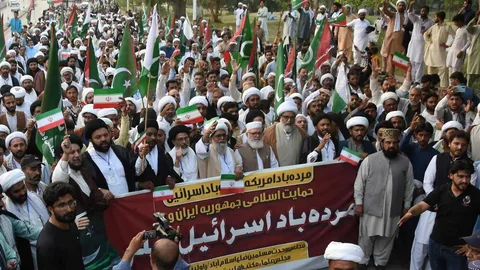
Pakistan, which shares a 900-kilometer border with Iran, found itself caught between powerful allies on all sides. Pakistan has adopted a policy of official neutrality, condemning attacks by all sides while engaging in shuttle diplomacy and facing domestic protests and an energy crisis linked to the conflict.The Iran Israel war quickly became a Pakistan crisis too — economically, diplomatically, and strategically.
Pakistan Iran Relations: Walking a Tightrope
Pakistan’s relationship with Iran has never been simple. The two countries share a long border, strong cultural ties, and trade links but also a history of tensions over sectarian violence and border incidents. Questions like “Did Iran attack Pakistan in 2026?” circulated widely online as the war escalated. The answer is no Iran did not directly attack Pakistan. However, the spillover effects of the Iran Israel war have deeply impacted Pakistan.
In response to the partial closure of the Strait of Hormuz and threats to Gulf shipping lanes following Iran’s retaliatory actions, the Pakistan Navy launched Operation Muhafiz-ul-Bahr on March 9, 2026. The operation deploys naval assets to protect Pakistani merchant ships, ensure communication systems, and ensure the smooth flow of the sea on which the country relies for about 90 percent of its oil imports from the Gulf region.
This operation addressed fears about an Iran attack on Pakistan ships transiting the Strait of Hormuz. Pakistan was not a military target but its ships and energy supply were directly threatened by the maritime chaos caused by the Iran Israel war.
Pakistan’s Diplomatic Push: The Five-Point Framework
Pakistan’s Foreign Minister Ishaq Dar arrived in Beijing on March 31 to meet with China’s Foreign Minister Wang Yi, a day after chairing a meeting with his counterparts from Turkey, Saudi Arabia, and Egypt as part of efforts to mediate the ongoing Iran-Israel-US war.Pakistan and China jointly unveiled a detailed five-point initiative aimed at halting the ongoing US-Israel war on Iran and restoring peace and stability across the Gulf region.The five points are clear and ambitious:
Key points of the plan include a call for an immediate ceasefire, a halt to attacks on civilian and critical infrastructure including energy, desalination and power facilities and the reopening of the Strait of Hormuz.The final component of the five-point plan focuses on reinforcing multilateral cooperation under the framework of the United Nations. Both countries called for renewed global efforts to establish a comprehensive peace framework grounded in the UN Charter and international law.This Pakistan Iran peace framework is now being watched by governments from Washington to Riyadh. Al Jazeera Iran Israel war coverage has closely tracked each diplomatic move Islamabad has made, highlighting Pakistan’s unique position as a country with access to both the US and Iran.
Quotes: What Officials Are Saying
According to analyst Baqir Sajjad Syed, Dar’s Beijing visit aimed to “translate these into a more concrete framework or outcome document,” noting that “in-person engagement allows more detailed coordination, possible alignment on parameters, and consideration of a joint statement.”Iranian President Masoud Pezeshkian, in a call with Prime Minister Shehbaz Sharif on March 28, stressed the need to “build trust in order to facilitate talks and mediation” and praised Pakistan for its “supportive role for peace.
Pakistan’s FM Ishaq Dar told Axios the proposal was a result of his bilateral meeting with Wang Yi, calling it “a balanced five-point initiative we both agreed on, which all would be happy to endorse.”Pakistan’s army chief, Field Marshal Syed Asim Munir, is reported to be facilitating dialogue between Iran and the US, with Egypt and Turkey urging Iran to “engage constructively.”
Pakistan’s Stance on Israel and Iran
Pakistan has been firm and consistent: it opposes the US-Israeli strikes on Iran and has condemned violence on all sides. Pakistan maintains close ties with both Washington and Tehran and has in recent days positioned itself as an intermediary, saying it conveyed to Iran a US peace plan. China and its Pakistani ally have opposed the US-Israeli strikes since they began on February 28 while also condemning Iran’s retaliatory actions in the Gulf, including attacks affecting shipping in the Strait of Hormuz.Pakistan’s stance on the Israel and Iran conflict can be summarized as principled neutrality with active diplomacy. Islamabad refuses to take sides militarily but is deeply invested in brokering a deal. Defense Minister Khawaja Asif had previously stressed the importance of the US relationship but ruled out military participation in any campaign against Iran. This balancing act defines Pakistan’s place in the Iran Israel war.
Regional and Global Impact
The Iran Israel war has sent shockwaves far beyond the Middle East. Pakistan Iran relations, already complex, are now under a global spotlight. The Strait of Hormuz crisis has disrupted oil markets worldwide, and Pakistan which depends on Gulf energy imports is among the countries hardest hit.
The proposal calls for an immediate ceasefire, protection of civilians, humanitarian access, and a return to dialogue under a United Nations framework. It places particular emphasis on ensuring safe navigation through the Strait of Hormuz, warning against disruptions to global energy flows.Pakistan’s role also has a domestic dimension. The Pakistani government announced emergency austerity measures including a four-day workweek for federal and provincial employees, a two-week closure of educational institutions, and restrictions on non-essential energy use to conserve fuel reserves.Al Jazeera Iran Israel war coverage has noted that Pakistan’s mediation role has earned it rare goodwill from both sides something few countries can claim in such a polarized conflict. Yet critics argue that the framework remains vague. China’s five-point proposal is structured to avoid friction or controversy but that is not necessarily a recipe for solving conflict.
Who Is Stronger Iran or Israel?
This is one of the most searched questions since the Iran Israel war began. Militarily, Israel holds clear advantages in air power, precision strike capability, and intelligence especially when backed by US forces. Iran, however, has strategic depth, a vast missile arsenal, proxy networks across the region, and now control of the Strait of Hormuz. Iran has also put forward its own ceasefire proposal, calling for war reparations and sovereignty over the Strait of Hormuzsignaling it sees itself as a power that must be negotiated with, not surrendered to.
The Iran Israel war has shown that neither side can achieve a quick, clean victory. That reality is precisely why Pakistan’s peace initiative holds strategic value.
Conclusion: What Comes Next?
Pakistan Iran diplomacy is now at a critical crossroads. Pakistan intends to continue nudging the United States and Iran towards negotiations, but the Ministry of Foreign Affairs acknowledges “obstacles” in its efforts.
Trump told reporters that the US was talking to “the right people” in Iran to secure a deal, adding that Iranians were eager to do so.Whether that optimism is justified remains to be seen. The Pakistan Iran peace framework offers a roadmap but the hardest steps are still ahead.
Pakistan has proven it can punch above its diplomatic weight in the Iran Israel war. Whether Islamabad can turn shuttle diplomacy into a signed agreement will define its role in global affairs for years to come.
FAQs
What is the Pakistan operation against Iran?
Pakistan has not launched any military operation against Iran. However, it launched Operation Muhafiz-ul-Bahr a naval mission to protect Pakistani merchant ships in the Strait of Hormuz after Iran’s actions partially blocked the waterway during the Iran Israel war in 2026.
What is Pakistan’s stance on Israel and Iran conflict?
Pakistan maintains official neutrality in the Iran Israel war. It has condemned strikes by all parties, opposed the US-Israeli military campaign against Iran, and is actively mediating between Washington and Tehran. Pakistan has ruled out any military involvement on either side.
Who is stronger, Iran or Israel?
Israel has superior air power and precision military technology, especially combined with US forces. Iran holds strategic advantages through its missile program, regional proxy networks, and control over the Strait of Hormuz. Neither side has achieved decisive victory, making diplomacy including the Pakistan Iran peace framework increasingly essential.