


PM Pezeshkian Mideast de-escalation efforts received a significant diplomatic boost as Prime Minister Shehbaz Sharif held a telephone call with Iranian President Masoud Pezeshkian, stressing the urgent need for collective action to halt the spiraling conflict in the Gulf.
The prime minister underscored the urgent need to work collectively for de-escalation and a return to dialogue and diplomacy amongst all the neighbouring countries to settle their differences, and stressed upon the critical importance of unity in the ranks of the ummah, which was required more than ever before. Dawn
Pakistan assured the Iranian leadership that it would continue to play a constructive role in facilitating peace in the region. DNA News Agency
The call forms part of a broader Pakistani diplomatic outreach that has seen PM Shehbaz engage multiple regional leaders in recent days, all centred on the same message — stop the fighting and return to the table.
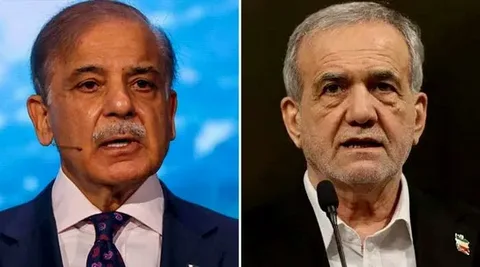
Background
The PM Pezeshkian Mideast de-escalation call comes as the war in the Gulf entered its fourth week with no ceasefire in sight.
The conflict between the United States, Israel, and Iran erupted when US and Israeli forces launched coordinated strikes on Iranian military sites, citing threats to regional security. The attacks quickly escalated into a broader confrontation, with Iran retaliating through drone and missile strikes targeting US assets and allied interests across the Gulf. The Express Tribune
More than 2,000 people have been killed in the war, which has upended markets, driven up fuel costs, accelerated global inflation fears, and convulsed the Western defence alliance. DNA News Agency
Against this backdrop, the PM Pezeshkian Mideast de-escalation initiative represents one of the most direct pieces of diplomatic outreach from Pakistan’s leadership since hostilities began.
PM Pezeshkian Mideast De-escalation — What Was Said
The PM Pezeshkian Mideast de-escalation call covered three main areas.
PM Shehbaz conveyed his serious concern to President Pezeshkian over the dangerous ongoing hostilities in the Gulf region and underscored the importance of collective action to bring about de-escalation, urging a shift towards diplomatic engagement to address the escalating crisis. Pakistan Today
He also extended Eid ul Fitr and Nowruz greetings to the Iranian president and the people of Iran. The Iranian president warmly reciprocated the sentiments, conveying his best wishes for the people of Pakistan. Pakistan Observer
PM Shehbaz expressed deep sorrow over the loss of lives caused by the ongoing hostilities, offering condolences and prayers for the swift recovery of the injured and the safety of those displaced by the conflict. Pakistan Observer
Pakistan’s Wider Diplomatic Push
The PM Pezeshkian Mideast de-escalation call is not Pakistan’s only move on the diplomatic front.
PM Shehbaz held telephonic conversations with Malaysian Prime Minister Anwar Ibrahim, Azerbaijan President Ilham Aliyev, and Uzbek President Shavkat Mirziyoyev, extending Eidul Fitr greetings and discussing regional developments. He called for de-escalation and an immediate end to hostilities in each conversation, urging resolution of differences through dialogue and diplomacy. He stressed the same in a call with Indonesian President Prabowo Subianto and in a conversation with Bahrain’s king. The Express Tribune
Pakistan has maintained a cautious but clear posture since the conflict began — expressing solidarity with the Iranian people while consistently calling for peace rather than military escalation. This position has won Islamabad a degree of trust on both sides and shaped its role as a potential facilitating voice in any future negotiation process.
The push for PM Pezeshkian Mideast de-escalation also fits into broader diplomatic activity across the region. India’s PM Modi held a similar call with President Pezeshkian days earlier, centred on the safety of Indian nationals in the Gulf and the threat to global maritime trade. These parallel diplomatic tracks reflect the scale of international concern over the conflict’s potential to spread further.
Why Did the US Attack Iran — Context
Understanding the PM Pezeshkian Mideast de-escalation call requires understanding how the war started — a question that has drawn significant global attention, not unlike the intense international coverage that surrounded the pesh kenya latest reports on African nations’ responses to the crisis.
Tensions between the United States and Iran stretch back to the Islamic Revolution in 1979 and the subsequent Iran hostage crisis. The immediate concerns leading up to the conflict included Iran’s nuclear program, its ballistic missiles, its military reach in the Middle East region, and failed attempts to renegotiate a nuclear deal after the collapse of the 2015 Joint Comprehensive Plan of Action. Encyclopedia Britannica
At 2:30 a.m. EST, Donald Trump released a video statement saying that the purpose of the US strikes in Iran was effectively regime change. Trump said that Iran’s menacing activities endangered the US and its allies. He cited the Iran hostage crisis, support for proxies such as Hamas and Hezbollah, and its killings of protesters. Wikipedia
Beginning in late December 2025, massive nationwide anti-government protests erupted in Iran, driven largely by economic crisis, the collapse of the rial, and rising prices. The protests became the largest in scale since the 1979 revolution, spreading to over 100 cities. The Iranian government responded with violent repression, including massacres of protesters. Wikipedia
A factor in the decision to strike was Iran’s weakened position due to the Israel-Hamas War, the 12-Day War in June 2025, and the 2026 Iranian protests. Britannica
The human cost has been severe. Just as international observers tracking pesh mwende and civic rights issues across the region have drawn comparisons to peaceful demonstration on monday movements globally, rights groups documented tens of thousands of deaths and arrests inside Iran before the war even began.
What Power Does the Ayatollah Have
The PM Pezeshkian Mideast de-escalation call also raises a fundamental question about Iran’s power structure — what role does the Ayatollah, or Supreme Leader, actually play?
The supreme leader is Iran’s head of state, overseeing virtually all functions of government either directly or indirectly. Although Iran’s president and legislature are directly elected by the Iranian people, the concentration of power in the hands of the rahbar returned Iran to a dictatorship in which the rahbar commands tremendous sway over both policy making and the electoral process. Encyclopedia Britannica
According to articles 57 and 110 of the constitution, the supreme leader sets domestic and foreign policy and supervises all branches of the government, including the executive, legislature and judiciary. Through the Guardian Council, he has the power to vet electoral candidates and veto parliamentary laws. FIU News
The second supreme leader, Ali Khamenei, issued decrees and made the final decisions on the economy, the environment, foreign policy, education, national planning, and other aspects of governance. The office is a lifetime appointment. Wikipedia
This is why the killing of Ali Khamenei at the start of the conflict sent shockwaves well beyond Iran’s borders. The supreme leader was not simply a figurehead — he was the single point through which all major state decisions passed. After his death, his son Mojtaba Khamenei was appointed supreme leader in the post’s first dynastic succession. Encyclopedia Britannica
Quotes
“In view of this grave situation, the prime minister underscored the urgent need to work collectively for de-escalation and a return to dialogue and diplomacy amongst all the neighbouring countries to settle their differences.”
— PM’s Office Statement on the Shehbaz-Pezeshkian call
“He stressed upon the critical importance of unity in the ranks of the ummah, that is required more than ever before.”
— PM’s Office Statement
“Pakistan would continue to play a constructive role in facilitating peace in the region.”
— PM Shehbaz Sharif, assurance given to President Pezeshkian
“As a neighbouring brotherly country of Iran, the prime minister conveyed Pakistan’s solidarity with the brave Iranian people.”
— PM’s Office Statement
Impact
For Pakistan, the PM Pezeshkian Mideast de-escalation phone call reinforces Islamabad’s positioning as a constructive and neutral diplomatic voice. Pakistan shares a long border with Iran, has deep religious and cultural ties with Tehran, and cannot afford further regional instability — making its calls for peace both sincere and strategically necessary.
For Iran, the call signals that Pakistan’s leadership maintains direct communication with Pezeshkian at a time when many governments have either taken sides or gone silent. For a country navigating a war while managing a leadership transition, that line of communication matters.
For the wider region, the PM Pezeshkian Mideast de-escalation push reflects growing international concern that without coordinated diplomatic pressure, the conflict risks expanding beyond its current frontlines. Oil markets, global supply chains, and the economies of dozens of countries — from South Asia to East Africa — continue to be shaken by the uncertainty.
FAQs
Why did the US overthrow the government in Iran?
The US did not overthrow the Iranian government directly but launched strikes in February 2026 citing Iran’s nuclear program, ballistic missile development, and support for proxy groups. Trump stated the goal was regime change, referencing decades of hostility including the Iran hostage crisis and Iranian repression of its own protesters in 2025 and 2026. The strikes killed Supreme Leader Ali Khamenei but the Iranian government has continued to function under new leadership.
What started the war in Iran in 2026?
The 2026 Iran war began when the United States and Israel launched surprise coordinated airstrikes on Iran on February 28, 2026, targeting nuclear facilities, military infrastructure, and senior leadership. The strikes killed Supreme Leader Ali Khamenei. Iran retaliated with missile and drone strikes against Israel and US bases across the Gulf. The conflict followed failed nuclear negotiations, mass protests inside Iran, and a US military buildup in the region.
What power does the Ayatollah have?
The Ayatollah, or Supreme Leader, is Iran’s head of state and holds final authority over all government functions — including foreign policy, the armed forces, the judiciary, and the vetting of electoral candidates. No major decision in Iran is taken without the supreme leader’s approval. The position is a lifetime appointment with powers far exceeding those of the elected president, making it the single most powerful office in the Iranian political system.
Conclusion
The PM Pezeshkian Mideast de-escalation call represents Pakistan’s clearest diplomatic statement since the Gulf war began — a direct message to Tehran that peace is necessary, unity within the Muslim world is essential, and military confrontation must give way to dialogue.
Whether that message gains traction will depend on factors far beyond Islamabad’s control. Negotiations between Washington and Tehran remain publicly denied by Iran and unconfirmed by the US. The war is now in its fourth week.
What is clear is that Pakistan is not standing on the sidelines. The PM Pezeshkian Mideast de-escalation initiative places Islamabad firmly in the camp of those pushing for a diplomatic exit — and positions Pakistan to play a constructive role if and when talks begin in earnest.