

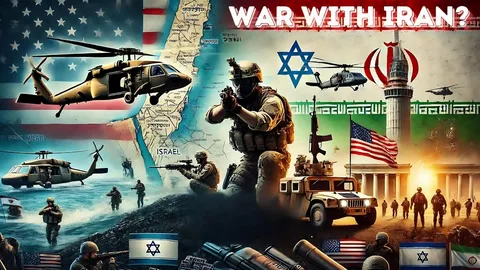

The US war with Iran is entering a phase that senior American military and diplomatic officials are privately describing as a conflict with no easy exit — as initial expectations of a short, decisive operation give way to the grinding reality of an adversary that has absorbed devastating strikes and continues to fight back across multiple domains simultaneously.
The US war with Iran that began on February 28, 2026 with coordinated strikes on Iranian nuclear and military infrastructure has achieved significant military objectives — killing Supreme Leader Ali Khamenei, destroying much of Iran’s nuclear programme, and degrading IRGC capabilities across multiple fronts. But it has failed to achieve the rapid political capitulation that would have constituted a clean victory — leaving the United States managing an escalating conflict whose economic, military, and political costs are rising faster than any exit ramp is appearing.
Iran war marines deployment pressure is building as the IRGC sustains multi-front retaliation campaigns against US military bases across the Gulf. US sending troops to Iran in any ground combat capacity would represent a dramatic escalation that the administration has sought to avoid. Iran 3 conditions to end the US war with Iran — announced through back-channel communications — have been described by Washington as non-starters, leaving diplomacy as blocked as the military situation is costly.
Background: US War With Iran — How the Conflict Became a Quagmire
The US war with Iran was launched with a theory of victory that has not materialised on the timeline the administration anticipated.
The theory of victory underpinning the US war with Iran rested on 3 assumptions. First — that destroying Iran’s nuclear programme and killing its supreme leader would cause the Iranian political and military establishment to fracture, with pragmatists overcoming hardliners to accept US terms for ending the conflict. Second — that Iran’s conventional military inferiority relative to US and Israeli forces would translate rapidly into Iran’s inability to sustain meaningful retaliation. Third — that the economic shock of Strait of Hormuz closure and oil price surges would be short-lived and manageable within US domestic political tolerance.
All 3 assumptions have proven at least partially wrong. The Iranian political establishment has not fractured — instead rallying around new Supreme Leader Mojtaba Khamenei and framing the US war with Iran as a civilisational confrontation that demands unified resistance. Iran’s conventional military inferiority has not prevented it from sustaining devastating multi-front retaliation through asymmetric means — drone boats, sea mines, ballistic missiles, and proxy force activation across the region. The economic shock of the US war with Iran has proven larger and more politically damaging than the administration anticipated — with oil above $100 per barrel, US gas prices surging, and Goldman Sachs warning of inflation returning to 3 percent.
The US war with Iran has therefore evolved from a short decisive operation into something that is beginning to acquire the characteristics of strategic overextension — a situation in which the costs of the conflict are accumulating faster than its objectives are being achieved.
Why There Are Few Easy Exits From the US War With Iran
The Military Exit Problem
The US war with Iran cannot be ended by military means alone without either accepting less than the stated objectives or escalating to a level of force that would create its own catastrophic consequences.
The stated US objective in the US war with Iran — preventing Iran from obtaining nuclear weapons — has been substantially achieved through the destruction of Iran’s nuclear infrastructure. But the administration has also demanded unconditional Iranian surrender and regime behaviour change that goes far beyond nuclear weapons — creating a maximalist objective set that Iran has zero incentive to accept.
Reducing US objectives to the nuclear question alone — declaring victory on the basis of nuclear infrastructure destruction and seeking a ceasefire — is politically difficult for an administration that has publicly committed to unconditional surrender as the endpoint of the US war with Iran. Walking back that commitment would be characterised domestically as weakness and internationally as an unreliable US commitment to stated war aims.
Escalating to the level of force required to compel genuine Iranian capitulation — potentially including ground force deployment, regime change operations, and sustained occupation — would transform the US war with Iran from an air and naval campaign into a ground war with an Iranian population of 88 million people across a country four times the size of Iraq. Iran war marines deployment in a ground combat role would immediately trigger the most politically explosive comparisons with the Iraq War quagmire that every US president since 2003 has sought to avoid.
The Diplomatic Exit Problem
The US war with Iran diplomatic exit is equally blocked — with Iran 3 conditions to end the war representing a negotiating position that Washington has rejected while offering no counter-framework for ending hostilities.
Iran 3 conditions to end the US war with Iran — communicated through Qatari and Omani back-channels — consist of a complete cessation of US and Israeli strikes on Iranian territory, the lifting of all US sanctions imposed since 2018, and a formal US commitment not to pursue regime change in Iran. These Iran 3 conditions represent the minimum Mojtaba Khamenei supreme leader can accept without destroying his own domestic political legitimacy in the opening weeks of his supremacy.
The US has rejected the Iran 3 conditions as incompatible with its stated war objectives — but has not articulated a counter-offer that provides Iran with any face-saving exit. The absence of a negotiating framework on either side of the US war with Iran means that diplomacy is currently providing no pathway to resolution.
The Domestic Political Exit Problem
The domestic political exit from the US war with Iran is blocked by the contradictions between the administration’s maximalist public rhetoric and the growing public opposition documented in polling data.
Trump’s repeated claims that the US war with Iran was nearly over or that Iran had already effectively surrendered have created a credibility problem — as the conflict continues beyond the timelines implied by those statements. A CNN poll showing 60 percent of Americans opposing military action and a Fox News poll showing 61 percent disapproving of Trump’s economic management together document a domestic political environment in which the US war with Iran is becoming a political liability.
Iran War Marines — Ground Force Pressure
Iran War Marines — The Deployment Question
Iran war marines deployment pressure has been building as the IRGC sustains attacks on US military installations across the Gulf and as the limitations of an exclusively air and naval campaign against Iran become clearer.
Iran war marines are already present in the Gulf region in substantial numbers — with Marine Expeditionary Units deployed aboard US Navy amphibious assault ships in the Persian Gulf and Arabian Sea as part of the standard US military posture in the region. These Iran war marines are configured for a range of contingencies including non-combatant evacuation operations, special operations support, and conventional amphibious assault.
The question of whether Iran war marines will be committed to ground combat operations in or near Iranian territory is the most consequential unresolved military decision of the US war with Iran. Ground force deployment would represent a fundamental escalation — transforming the conflict from a campaign of air and naval strikes into a ground war with all the associated risks of casualties, quagmire, and the kind of open-ended commitment that the US war with Iran was explicitly designed to avoid.
Iran War Marines — IRGC Threat to Gulf Installations
Iran war marines deployed at Gulf bases face specific threats from IRGC ground infiltration operations — with Iranian special forces capable of crossing porous Gulf state borders to conduct attacks on US military installations that air defence systems cannot intercept. This threat has driven requests from US military commanders for additional Iran war marines to reinforce perimeter security at installations across the region.
US Sending Troops to Iran — The Escalation Scenario
US Sending Troops to Iran — What Would Trigger It
US sending troops to Iran in a ground combat role would represent the most dramatic escalation of the US war with Iran — and the scenario most feared by US military planners, allied governments, and the American public.
US sending troops to Iran scenarios that military planners consider most plausible include a scenario in which Iranian forces capture or kill significant numbers of US personnel at a Gulf base — generating domestic political pressure for a punitive ground response. A second US sending troops to Iran scenario involves the discovery that Iran has reconstituted nuclear weapons capability faster than anticipated — requiring ground forces to destroy hardened underground facilities that air strikes cannot reach. A third scenario involves the complete collapse of regional security in ways that require US ground forces to protect critical Gulf state partners from internal or external Iranian-backed threats.
US sending troops to Iran in any of these scenarios would immediately trigger the War Powers Act debate that has been building since the US war with Iran began — with Congress demanding a formal declaration of war or authorisation for use of military force before ground combat operations could be sustained beyond the 60-day War Powers Resolution limit.
Iran 3 Conditions to End the US War With Iran
Iran 3 Conditions — What Tehran Is Demanding
Iran 3 conditions to end the US war with Iran represent Mojtaba Khamenei supreme leader’s opening negotiating position — communicated through Qatari and Omani back-channels that remain the only functioning diplomatic conduits between Washington and Tehran.
The Iran 3 conditions are a complete and immediate cessation of all US and Israeli military strikes on Iranian territory. Full lifting of all sanctions imposed on Iran since the US withdrawal from the JCPOA in 2018. A formal binding US commitment to non-interference in Iranian internal affairs and non-pursuit of regime change.
Iran 3 Conditions — Why Washington Has Rejected Them
The US has rejected Iran 3 conditions on the grounds that they require Washington to abandon virtually every leverage point it holds in the US war with Iran in exchange for a ceasefire that leaves the Iranian regime intact and in power — precisely the outcome that the maximalist US war objectives were designed to prevent.
Washington’s counter-position — that Iran must accept unconditional surrender and fundamental changes to its regional behaviour before any ceasefire — is equally unacceptable to Tehran. The gap between the Iran 3 conditions and the US counter-position represents the diplomatic distance that mediators including Qatar, Oman, and the UN are attempting to bridge without yet having found a formulation acceptable to both sides.
Quotes on US War With Iran
US Defense Secretary Pete Hegseth stated that the US war with Iran was proceeding according to plan — adding that the administration would not accept Iran 3 conditions as a basis for ending the conflict and that Iran’s only path to peace was compliance with US demands for fundamental changes to its nuclear programme and regional behaviour.
A senior Democratic Senator emerging from a classified US war with Iran briefing told reporters that what he had heard inside was deeply concerning — describing a conflict with no clear exit strategy, rising American casualties, and an administration that appeared to be improvising its war termination approach in real time.
Former CIA Director and retired General David Petraeus warned in a widely circulated commentary that the US war with Iran was exhibiting the early signs of strategic overextension — urging the administration to develop a realistic war termination framework before domestic political pressure and economic costs created conditions for an even more damaging disorderly exit.
Qatar’s Prime Minister Sheikh Mohammed bin Abdulrahman Al Thani — whose government is hosting the primary back-channel between Washington and Tehran — told the Financial Times that both sides in the US war with Iran needed to demonstrate the strategic flexibility required to move from their opening positions toward a negotiated framework, adding that Qatar remained committed to facilitating that process for as long as it took.
Iranian Foreign Minister Abbas Araghchi stated through state media that Iran 3 conditions to end the US war with Iran were non-negotiable minimums — adding that Tehran was prepared to sustain resistance for as long as necessary if the United States refused to engage seriously with Iran’s legitimate security concerns.
A senior Goldman Sachs economist warned that if the US war with Iran continued for another 4 to 6 weeks without Strait of Hormuz reopening, the economic damage to the global economy would begin to produce recessionary signals in major economies — adding that the window for a cost-contained resolution of the US war with Iran was narrowing rapidly.
Impact: What the US War With Iran Means Going Forward
Military Trajectory
The US war with Iran military trajectory — absent a diplomatic breakthrough — points toward either continued attritional air and naval operations that impose costs on both sides without achieving decisive political results, or escalation to ground force deployment that transforms the conflict’s character and cost entirely.
Iran war marines deployment in a ground combat role would represent the most dangerous escalation scenario — potentially drawing the US into a conflict with 88 million Iranians across the region’s most strategically complex geography. US sending troops to Iran would also risk activating Iranian proxy forces across the region in ways that could stretch US military resources beyond sustainable levels.
Economic Trajectory
The economic trajectory of the US war with Iran is already producing measurable damage — with oil above $100 per barrel, US gas prices at multi-year highs, and Goldman Sachs warning of inflation returning to levels that would require Federal Reserve interest rate responses that compound the economic damage of the oil price shock.
Every additional week of US war with Iran without Strait of Hormuz reopening adds approximately 15 to 20 billion dollars to the global economic cost of the conflict — a figure that is translating directly into consumer price increases, reduced growth forecasts, and the political backlash documented in US polling data.
Political Trajectory
The political trajectory of the US war with Iran domestically points toward increasing congressional pressure, Democratic opposition, and public disapproval that will constrain the administration’s military options over time. The 60 percent CNN poll disapproval figure — if sustained and growing — represents the kind of political environment in which war termination becomes an urgent necessity rather than a strategic choice.
Frequently Asked Questions
Why Does the US Have Conflict With Iran?
The US-Iran conflict has its roots in the 1979 Islamic Revolution — when the overthrow of the US-backed Shah Reza Pahlavi and the subsequent hostage crisis in which Iranian students held 52 American diplomats for 444 days permanently ruptured the relationship. Since 1979 the US and Iran have been adversaries across multiple dimensions — Iran’s nuclear programme, its support for groups the US designates as terrorist organisations including Hezbollah and Hamas, its ballistic missile development, and its stated objective of ending US military presence in the Middle East. The US war with Iran that began in 2026 represents the direct military expression of a conflict that has been conducted through proxy wars, sanctions, covert operations, and diplomatic confrontation for over 4 decades.
Who Declares War in the USA?
Under Article I Section 8 of the US Constitution, only Congress has the power to formally declare war. However the last formal US declaration of war was issued in 1942 — against Romania, Hungary, and Bulgaria during World War Two. Since then the United States has conducted major military operations including Korea, Vietnam, Iraq, and Afghanistan under presidential authority claims and congressional Authorizations for Use of Military Force — AUMFs — rather than formal declarations. The US war with Iran was launched by President Trump under claimed Article II commander-in-chief authority and existing AUMFs — without a new formal declaration or specific AUMF. Democratic lawmakers have challenged this legal basis and are pushing for congressional oversight through the War Powers Resolution — which requires the president to notify Congress within 48 hours of committing forces to hostilities and limits unauthorised operations to 60 days.
How Many US Killed in the Iran War?
8 US service members have been confirmed killed in the Iran war as of the latest available figures — all dying in Iranian retaliation strikes on US military bases across the Gulf region rather than in offensive operations inside Iran. 9 or more additional US service members have been seriously injured. The 4 soldiers from the 103rd Sustainment Command in Des Moines Iowa were among the first American casualties confirmed. Iran war marines and other US personnel at Al Udeid Air Base in Qatar, the Fifth Fleet headquarters in Bahrain, and Ali Al Salem Air Base in Kuwait have faced the most intensive Iranian retaliation. The relatively limited US casualty figures reflect the primarily air and naval character of the US war with Iran — but military analysts warn that any escalation to ground operations or intensified Iranian retaliation could rapidly increase American casualties.
Conclusion
The US war with Iran is revealing the gap between the decisive short conflict that the administration promised and the grinding attritional reality that every student of Middle Eastern military history might have predicted.
Few easy exits exist from the US war with Iran — the military exit is blocked by the gap between maximalist objectives and achievable outcomes, the diplomatic exit is blocked by the incompatibility of Iran 3 conditions and US counter-demands, and the domestic political exit is blocked by the credibility cost of walking back public commitments to unconditional victory.
Iran war marines deployment pressure is building. US sending troops to Iran scenarios are being actively planned. Iran 3 conditions remain on the table rejected but unrefuted with any serious counter-offer. The Strait of Hormuz remains closed. Oil remains above $100. American service members are dying.
The US war with Iran will end — all wars end. The question is whether it ends on terms that justify its costs, or whether the absence of easy exits becomes the absence of any exit at all until the damage is severe enough to force one.