

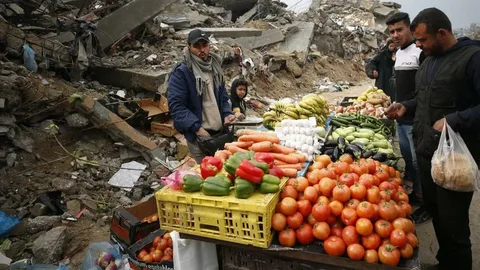

Gaza food prices have soared to catastrophic levels as border closures deepen shortages across the territory amid the expanding Iran war. Gaza food prices today show staple items including flour, rice, and cooking oil have risen by hundreds of percent since the border closures intensified. Gaza food prices per person have reached levels that make basic nutrition unaffordable for the vast majority of Gaza’s 2.3 million residents. Gaza food prices per kg for essential commodities now rival luxury food costs in wealthy nations — in one of the world’s poorest and most besieged territories.
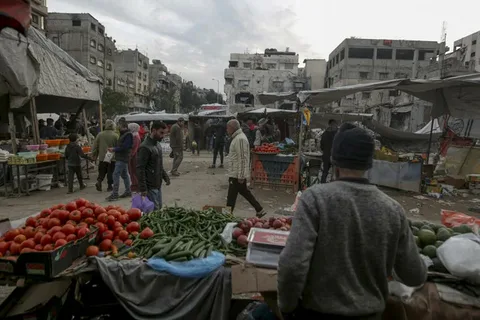
Background: How Gaza Food Prices Reached Crisis Levels
Gaza food prices did not reach their current catastrophic levels overnight. The crisis has been building since October 2023, when Israel imposed a comprehensive blockade on Gaza following the Hamas attacks of October 7. That blockade severely restricted the flow of food, fuel, medicine, and humanitarian aid into the territory.
Gaza food prices began their first dramatic surge in late 2023 as supply chains collapsed and humanitarian corridors were repeatedly closed or constrained. A partial easing in early 2025 brought some relief — but the outbreak of the US-Israel war on Iran in late February 2026 has triggered a second and more severe Gaza food prices crisis.
The Iran war has redirected Israeli military and political attention, complicated regional humanitarian logistics, and caused a broader Middle Eastern supply chain disruption that has pushed Gaza food prices today to their highest recorded levels. With the Strait of Hormuz effectively closed and regional food trade severely disrupted, the external inputs that Gaza’s limited food supply depends on — including imported grain, cooking fuel, and agricultural inputs — have become nearly impossible to source.
Border crossings that provided Gaza’s only lifeline for food imports — including Kerem Shalom and Rafah — have seen drastically reduced activity since the Iran war escalated. The result is a Gaza food prices crisis that humanitarian agencies are now describing as the worst food emergency in the territory’s modern history.
Details: Gaza Food Prices Today — What People Are Paying
Gaza Food Prices Today — Staple by Staple
Gaza food prices today bear no resemblance to pre-blockade levels. According to reports from humanitarian organisations operating in Gaza, the following Gaza food prices today have been recorded in March 2026:
Wheat flour — one of the most fundamental staples in Palestinian cuisine — is now selling for between $8 and $12 per kilogram in parts of Gaza where it is available at all. Pre-blockade Gaza food prices for flour were approximately $0.40 per kilogram. The increase represents a rise of between 2,000 and 3,000 percent.
Rice, another core staple, is being sold at Gaza food prices today of between $6 and $10 per kilogram where supplies exist. Pre-crisis Gaza food prices for rice were approximately $0.60 per kilogram.
Cooking oil — essential for food preparation — has reached Gaza food prices today of between $15 and $25 per litre in some markets, compared to pre-crisis levels of approximately $1.20 per litre.
Canned goods, lentils, and dried pulses — the last resort proteins for families who cannot afford meat — have seen Gaza food prices today rise by 500 to 800 percent from pre-crisis baselines.
Fresh vegetables and fruit, when available at all, carry Gaza food prices today that make them accessible only to the small minority of Gaza residents who have retained some income or savings.
Gaza Food Prices Per Kg — The Commodity Breakdown
Gaza food prices per kg data collected by humanitarian monitors in March 2026 presents a devastating picture of food system collapse:
Flour: $8–$12 per kg (pre-crisis: $0.40/kg) Rice: $6–$10 per kg (pre-crisis: $0.60/kg) Sugar: $5–$8 per kg (pre-crisis: $0.50/kg) Lentils: $4–$7 per kg (pre-crisis: $0.55/kg) Cooking oil: $15–$25 per litre (pre-crisis: $1.20/litre) Canned tuna: $8–$15 per can (pre-crisis: $1.00/can)
Gaza food prices per kg figures confirm that even the cheapest available calories now cost between 10 and 30 times their pre-crisis price. For a population where the majority had already been living in poverty before October 2023, the current Gaza food prices per kg levels represent an effective impossibility of adequate nutrition through market purchase alone.
Gaza Food Prices Per Person — The Human Cost
Gaza food prices per person calculations reveal the full scale of the nutritional crisis.
The United Nations World Food Programme estimates that a minimally adequate food basket for one person in Gaza — providing approximately 2,100 calories per day using the cheapest available foods — now costs between $15 and $25 per day at current Gaza food prices per person levels.
For context, the median daily income in Gaza before the October 2023 crisis was approximately $8 to $12 per day — and the vast majority of Gaza’s population has had no regular income since the blockade began. Gaza food prices per person data therefore confirms that purchasing even a survival-level diet through market means is financially impossible for most of Gaza’s 2.3 million residents.
Children are the most severely affected by Gaza food prices per person dynamics. UNICEF reported in early March 2026 that acute malnutrition rates among children under five in northern Gaza had reached levels consistent with famine classification under the Integrated Food Security Phase Classification framework. Gaza food prices per person for child-appropriate nutritious foods — including fortified cereals, dairy products, and protein sources — have risen even faster than general staple prices, making child malnutrition an acute and worsening emergency.
Quotes on Gaza Food Prices
The United Nations World Food Programme warned in March 2026 that Gaza food prices today have reached levels that place adequate nutrition entirely beyond the reach of the overwhelming majority of Gaza’s population, adding that humanitarian food distributions remain the only barrier between the current crisis and a full-scale famine.
UNICEF’s Gaza representative stated that Gaza food prices per person for nutritionally adequate diets for children have risen to levels that make child malnutrition not just likely but inevitable without immediate and sustained humanitarian intervention at a scale not yet achieved.
Oxfam’s Middle East director warned that the combination of border closures, the Iran war’s regional disruption to food supply chains, and the historically unprecedented Gaza food prices per kg levels has created conditions that meet every technical threshold for famine classification.
A Gaza resident speaking to Al Jazeera described the Gaza food prices today as a slow death sentence, saying a bag of flour that once cost a few shekels now required money that most families simply did not have.
The UN Office for the Coordination of Humanitarian Affairs stated that Gaza food prices today reflect a man-made humanitarian catastrophe — one that could be alleviated immediately if border crossings were opened and humanitarian access was restored at scale.
Impact: What Soaring Gaza Food Prices Mean for the Region and the World
Humanitarian Impact of Gaza Food Prices
The direct humanitarian impact of current Gaza food prices is already catastrophic and worsening.
Famine conditions — defined technically as a situation where at least 20 percent of the population faces extreme food shortage, acute malnutrition rates in children exceed 30 percent, and death rates exceed two per 10,000 people per day — are either already present or imminent in parts of Gaza according to multiple humanitarian agencies monitoring Gaza food prices today and nutritional indicators on the ground.
The Gaza food prices per kg and Gaza food prices per person data together confirm that market-based food access has functionally collapsed for the majority of the population. Humanitarian food distributions are the only source of nutrition for hundreds of thousands of families — and those distributions are themselves constrained by the same border closures and logistical disruptions that are driving Gaza food prices today to record highs.
Regional Impact of Gaza Food Prices Crisis
The Gaza food prices crisis is generating significant regional political pressure on Arab governments to demand the reopening of humanitarian corridors. Egypt, Jordan, and Qatar — all of which have been involved in previous Gaza ceasefire negotiations — have issued increasingly urgent statements about Gaza food prices today and the broader humanitarian situation.
The Iran war’s regional disruption has simultaneously reduced the diplomatic bandwidth available to address the Gaza food prices crisis — as governments across the Middle East focus on the immediate security consequences of the US-Israel-Iran conflict, the slower-burning but equally severe Gaza food prices emergency risks falling further down the international agenda.
Global Impact of Gaza Food Prices
Gaza food prices today have become a focal point for global humanitarian advocacy and political pressure. Human rights organisations, UN agencies, and governments across Europe, Asia, and the Global South have pointed to Gaza food prices per kg and Gaza food prices per person data as evidence of what they describe as collective punishment of a civilian population.
The International Criminal Court’s ongoing proceedings related to the Gaza conflict have cited humanitarian indicators including Gaza food prices as part of the evidentiary record being compiled for potential war crimes and crimes against humanity prosecutions.
Conclusion
Gaza food prices today represent one of the most severe and well-documented food crises anywhere in the world. Gaza food prices per kg data shows staple costs have risen between 1,000 and 3,000 percent from pre-crisis baselines. Gaza food prices per person figures confirm that market-based nutrition is financially impossible for the overwhelming majority of Gaza’s 2.3 million residents. The Iran war has deepened and extended the Gaza food prices crisis by disrupting regional supply chains, redirecting international attention, and further complicating humanitarian access negotiations. Without an immediate and sustained opening of border crossings and a dramatic scaling up of humanitarian food distributions, the Gaza food prices crisis will deepen further — and the famine that agencies have been warning about for months will become an undeniable reality.