


(Publish from Houston Texas USA)
(By: Umme e Habiba)
The Denzel Effect: Five Decades of Power, Presence, and Unmatched Screen Authority
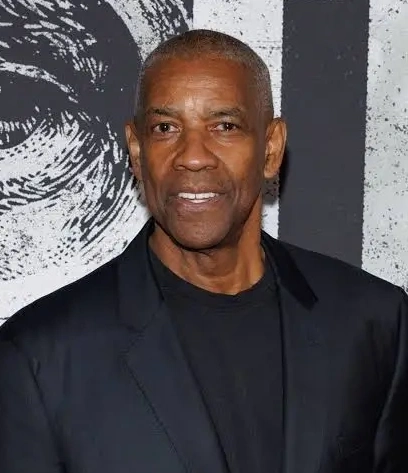
In the pantheon of Hollywood legends, few names command as much immediate respect as Denzel Washington. Over a career spanning five decades, he has transitioned from a charismatic young talent on television to arguably the greatest actor of the 21st century. His filmography is not merely a collection of hits; it is a masterclass in the “Denzel effect”—a rare combination of magnetic screen presence, moral complexity, and an effortless authority that makes even the most understated scenes feel monumental.
From Mount Vernon to the Stage
Born in 1954 in Mount Vernon, New York, Denzel’s path to the silver screen was far from linear. The son of a Pentecostal minister and a beauty shop owner, he grew up with a foundation of discipline and community. However, like many young men, he faced a crossroads in his teens. He often credits his mother’s decision to send him to a private military academy as a life-altering intervention that steered him away from the “streets” that claimed several of his peers.
Initially pursuing journalism and pre-med at Fordham University, Denzel discovered his calling during a summer stint as a camp counselor. After participating in a talent show, a colleague suggested he try acting. He returned to Fordham, changed his major to Drama, and eventually earned a scholarship to the prestigious American Conservatory Theater in San Francisco. This rigorous theatrical training would become the bedrock of his career, instilling in him a “stage-first” work ethic that he maintains to this day.
The Breakthrough: St. Elsewhere and Glory
Denzel first entered the American living room as Dr. Philip Chandler on the hit medical drama St. Elsewhere (1982–1988). While television provided stability, the big screen beckoned. His early film roles showcased a startling versatility, but it was his portrayal of Private Silas Trip in the 1989 Civil War epic Glory that changed everything.
In Glory, Denzel delivered a performance of such raw, defiant intensity—immortalized by the single tear shed during a flogging scene—that he won his first Academy Award for Best Supporting Actor. It was a signal to the world that a new titan had arrived, one who could embody the weight of history with a single look.
The 1990s: Defining a Cultural Icon
If the 80s were about discovery, the 90s were about dominance. Denzel became a leading man who could carry a film regardless of the genre. He collaborated with Spike Lee for the first of many times in Malcolm X (1992), a performance so transformative that it remains the gold standard for biographical portrayals. To play the civil rights leader, Denzel didn’t just mimic mannerisms; he channeled the man’s evolving spirit.
During this decade, he balanced prestige dramas with high-octane thrillers, proving his “everyman” appeal in films like:
- Philadelphia (1993): Playing a homophobic lawyer who finds his humanity while representing a man with AIDS (Tom Hanks).
- Crimson Tide (1995): Going toe-to-toe with Gene Hackman in a high-stakes submarine thriller.
- The Hurricane (1999): Portraying the wrongly imprisoned boxer Rubin “Hurricane” Carter, earning him a Golden Globe.
The Shift to the “Anti-Hero”
By the early 2000s, Denzel was a beloved hero. Then came Training Day (2001). In a shocking departure from his “noble” roles, he played Detective Alonzo Harris, a charismatic but utterly corrupt narcotics officer. His performance was a whirlwind of menace and ego, culminating in the iconic “King Kong ain’t got sh*t on me!” monologue. This role earned him his second Oscar, this time for Best Actor, making him the first Black actor since Sidney Poitier to win in that category.
This period also saw the beginning of his fruitful partnership with director Tony Scott. Together, they produced a string of visceral, stylish hits like Man on Fire, Deja Vu, and Unstoppable. Denzel proved that he could elevate “popcorn cinema” with the same gravitas he brought to Shakespeare.
The Director and the Mentor
Denzel’s contribution to cinema extends behind the lens. As a director, he has focused on stories that explore Black life and the human condition, most notably with Fences (2016), based on the play by August Wilson. Not only did he direct the film, but his performance as Troy Maxson earned him yet another Oscar nomination.
Beyond his own work, Denzel has quietly become a legendary mentor. He famously paid for a young Chadwick Boseman to attend an acting program at Oxford, an act of generosity Boseman only revealed years later at Denzel’s AFI Life Achievement ceremony. He has consistently used his platform to uplift the next generation, advocating for professional ethics and the “service” of storytelling.
Recent Years and the Future
Even as he entered his late 60s and early 70s, Denzel showed no signs of slowing down. He took on the challenge of Joel Coen’s The Tragedy of Macbeth (2021), earning his tenth Oscar nomination and proving his Shakespearean roots remain as sharp as ever.
As of 2026, his legacy continues to expand:
- The Equalizer Legacy: He recently confirmed he will return for The Equalizer 4 and 5, continuing his reign as a premier action star.
- Gladiator II: His scene-stealing role as Macrinus in Ridley Scott’s sequel earned him widespread acclaim and a 2025 Golden Globe nomination.
- Spike Lee Reunion: He is set to star in Highest 2 Lowest, a reinterpretation of Kurosawa’s High and Low, marking his fifth collaboration with Spike Lee.
- Broadway Return: In Spring 2025, he returned to the stage in Othello alongside Jake Gyllenhaal.
A Legacy of Integrity
What makes Denzel Washington unique is his refusal to be a “celebrity” in the modern sense. He is a craftsman. He is a man of faith, a devoted husband (married to Pauletta Washington since 1983), and a humanitarian who has served as the national spokesperson for the Boys & Girls Clubs of America for over 30 years.
In 2025, he was awarded the Honorary Palme d’Or at Cannes and the Presidential Medal of Freedom, the highest civilian honor in the United States. These accolades reflect a truth that audiences have known for decades: Denzel Washington doesn’t just play characters; he captures the soul of the human experience. Whether he is a defiant soldier, a corrupt cop, or a grieving father, he reminds us that true power on screen comes from the quietest moments of truth.
For more reading please visit our Articles.