

(Publish from Houston Texas USA)
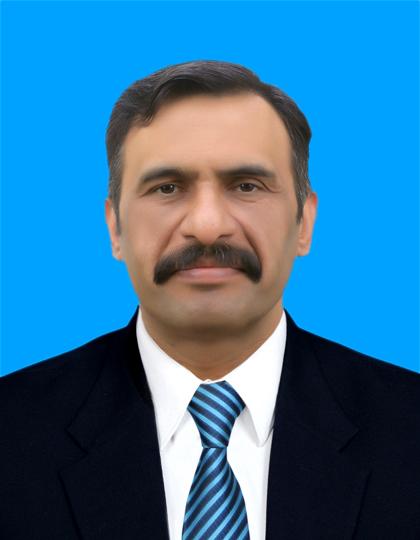
(Dr. Muhammad Rizwan Bhatti)
Elections or civil-military conflicts are common explanations for Pakistan’s ongoing political instability. However, these answers address symptoms rather than causes. In reality Pakistan’s predicament is a reflection of a more serious structural issue. Political growth is not keeping pace with the rapid social transformation that is taking place. As a result, a society that has undergone significant change now functions inside a political structure that is still unprepared to handle this change.
Long-term changes in social structures, values, norms, and interactional patterns are referred to as social change. Classical sociologists saw it as a shift from traditional to modern society, whereas Marx associated it with material transformation and class warfare. Over time, however, research has acknowledged that social development is neither intrinsically progressive nor linear. Instead, it is unevenly disputed and heavily influenced by power dynamics.
In developed societies, societal change was progressively absorbed through institutional development. Industrialization was followed by welfare states, increased citizenship, and democratic consolidation. As societies evolved, political institutions evolved alongside them. Consequently, conflict was resolved through law accountability and representation. Pakistan however has had a quite different experience.
Indeed, Pakistani society has changed significantly during the last two decades. Traditional social structures have been eroded by urbanization; women’s participation in public life and education has grown, and digital media has transformed political communication. Instead of relying on party headquarters, today’s youthful and connected populace participates in politics via cell phones. Yet institutional strength has not kept up with this surge in political consciousness.
The forces driving societal change in Pakistan are evident. First, population pressure has produced a sizable young cohort with high hopes but limited economic mobility. The second migration to cities has undermined informal structures of authority without replacing them with efficient urban governance. Third, social and digital media have increased political awareness, grievance, and mobilization. At the same time, they have intensified polarization, intolerance, and disinformation. Lastly, globalization has raised aspirations that domestic political and economic systems struggle to accommodate.
Meanwhile, political development, defined as the ability of institutions to manage legitimacy, participation, and conflict, has fallen behind. Political parties remain personalized and patronage-based rather than programmatic. Parliament is weak and reactive and often paralyzed by confrontation. Accountability mechanisms are applied selectively rather than consistently, and the bureaucracy continues to alternate between politicization and insulation.
This disparity reflects what Samuel Huntington described as political decay. Social mobilization expands more rapidly than political institutionalization. Pakistan today exhibits high levels of political participation, including protests, online activism, and street mobilization. However, public confidence in institutions continues to erode. Elections, rather than stabilizing competition, increasingly become flashpoints for contestation and delegitimization.
Recent political occurrences further underscore this reality. Millions have been energized by populist mobilization, but it has also deepened societal divisions. Digital platforms have empowered citizens to question authority. Yet in the absence of regulatory consensus, political disagreement frequently escalates into a persistent crisis. Judicial intervention, executive instability, and disputed mandates have thus become recurring patterns rather than exceptions.
From a theoretical perspective, Pakistan’s trajectory challenges the assumption that social development inevitably leads to democratic consolidation. Marxist analysis emphasizes how economic inequality and elite capture constrain the transformative potential of social change. A postcolonial approach highlights colonial institutional legacies of centralization, securitization, and bureaucratic dominance that continue to shape state behavior. Joel Migdal’s concept of a weak state and strong society appears particularly relevant. Although society has become more assertive, the state lacks the autonomy and capacity to regulate it effectively.
In effect, Pakistan has undergone social modernization without political modernization. Norms related to rights, identity, and participation have evolved more rapidly than constitutional and institutional frameworks. Consequently, rising expectations collide with limited state responsiveness. Each political crisis, whether triggered by elections, court rulings, or street protests, reinforces the perception that the system cannot resolve conflict fairly.
What then needs to be done? Bridging this gap requires moving beyond temporary solutions and personality-driven politics. Political progress demands stronger parties rooted in ideology rather than loyalty, empowered local governments capable of managing urban and socioeconomic diversity, and a credible rule of law applied consistently rather than selectively. Equally important is civic education so that political awareness translates into democratic norms rather than perpetual agitation.
Social transformation in Pakistan is irreversible. Therefore, the real question is whether political development will eventually catch up with a changing society or continue to lag behind. Until this fundamental mismatch is addressed, instability will remain not an exception but a defining feature of Pakistani politics.