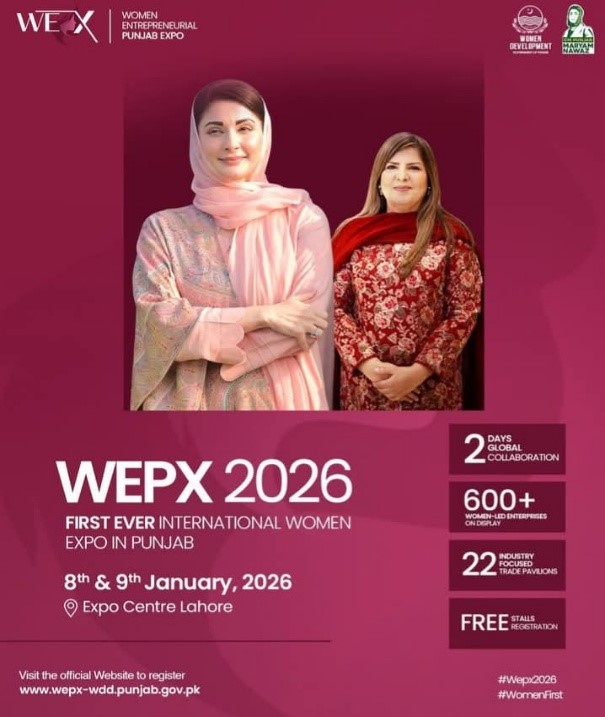
The dawn of 2026 brought with it a transformative moment for the economic landscape of Punjab, Pakistan.
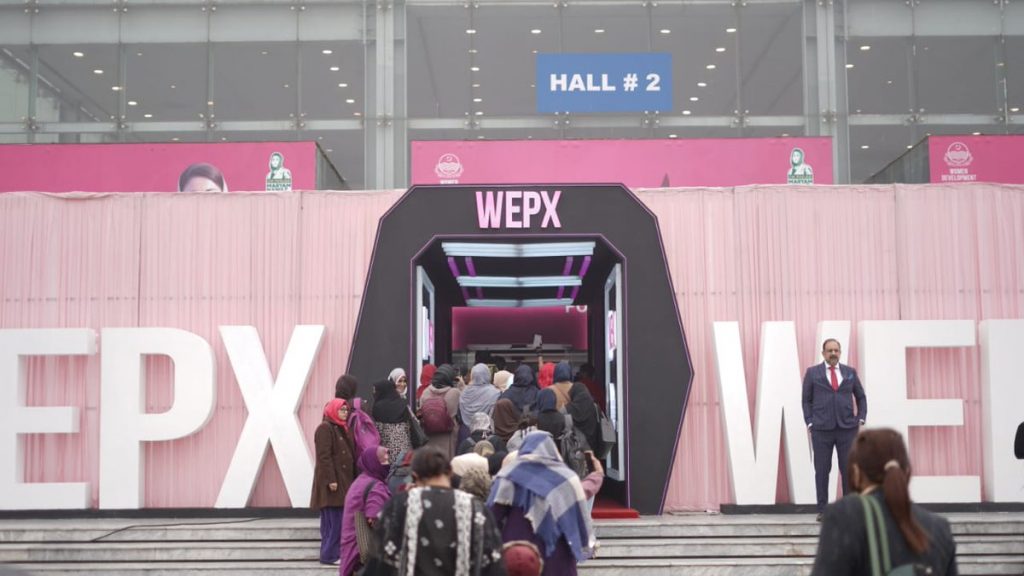
On January 8 and 9, the Expo Centre in Lahore became the epicenter of a movement that promised to move beyond the symbolic gestures of the past. The Women Entrepreneurial Pakistan Expo 2026, widely known as WEPX 2026, was not just another exhibition; it was a bold statement of intent from the Government of Punjab, signalling a new era where women are positioned as the primary drivers of provincial growth.
Organized by the Women Development Department (WDD) under the visionary leadership of Chief Minister Maryam Nawaz Sharif, the event brought together over 600 women entrepreneurs from every corner of the province. From the bustling tech hubs of Lahore to the traditional craft centers of Southern Punjab, the expo provided a centralized platform for innovation, commerce, and connection. This article explores the intricate details of this landmark event and what it means for the future of women-led businesses in the region.
Why was WEPX 2026 a game-changer for women in Punjab?
For decades, women’s empowerment initiatives in the region often focused on visibility without viability. WEPX 2026 sought to break this cycle by operating under the “Women First” framework. This policy-driven approach recognizes that sustainable economic growth is impossible if half the population remains on the sidelines. Unlike previous events where participation often came at a high cost, the Punjab government provided stalls free of charge, ensuring that even micro-entrepreneurs and home-based businesses could access a high-profile market.
The expo was designed as a market access intervention rather than a mere display of products. By removing the financial barriers to entry, the WDD allowed entrepreneurs to focus entirely on their commercial viability. This shift from “participation” to “power” is the hallmark of the current administration’s economic strategy. It acknowledges that women do not need charity; they need access to capital, markets, and formal networks to scale their ventures.
Key highlights of the two-day event
The atmosphere at the Expo Centre Lahore was electric from the moment the doors opened at 10:00 AM on January 8. The inauguration ceremony, led by key government officials and industry leaders, set a tone of high energy and professional excellence. The event was spread across Halls 1, 2, and 3, each meticulously organized into sector-specific zones such as TechVentures, GreenFuture, and FinTech.
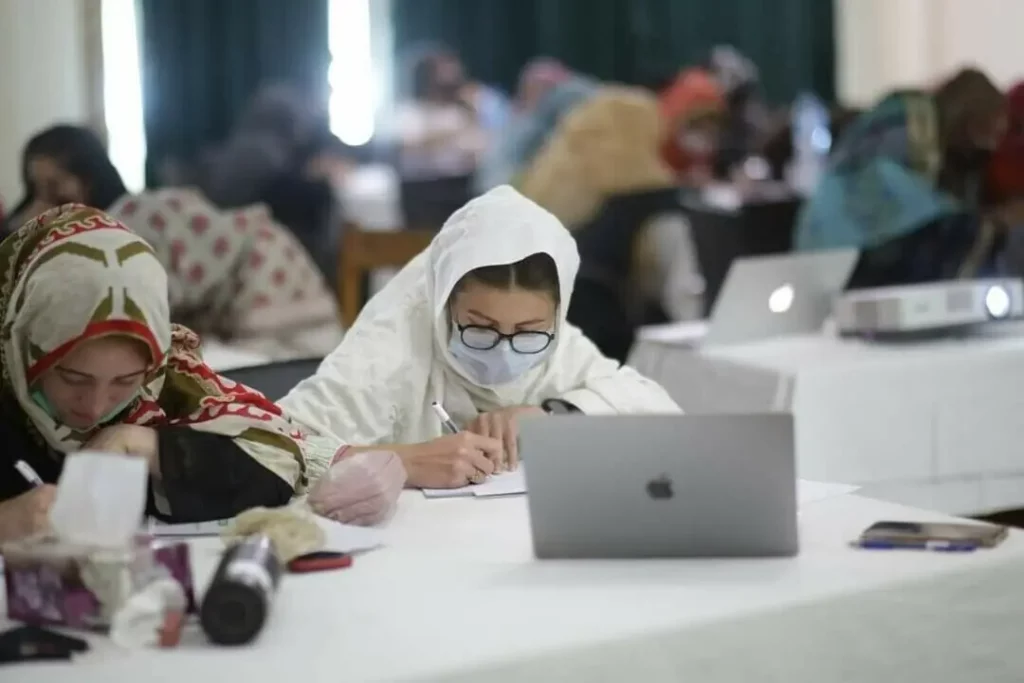
One of the most significant features of WEPX 2026 was the “Founder Talks” series. These sessions allowed established women leaders to share their journeys, challenges, and strategies for success with an audience of aspiring entrepreneurs. These were not just motivational speeches but practical masterclasses in navigating the complexities of the Pakistani market. Additionally, roundtable dialogues brought together policymakers, investors, and entrepreneurs to discuss structural barriers like limited access to finance and restricted mobility, aiming to find actionable solutions.
The diversity of the participants was equally impressive. Over 600 entrepreneurs showcased everything from cutting-edge software solutions and sustainable fashion to organic healthcare products and traditional handicrafts. Partners like LAAM, the Prime Ecosystem Partner, and Pharma Health played a crucial role in bridging the gap between small-scale producers and large-scale retail opportunities.
How does WEPX 2026 fit into the broader “Women First” vision?
WEPX 2026 does not exist in a vacuum. It is a critical component of the Punjab Government’s Annual Development Programme for 2025–26. This broader agenda includes the establishment of Women Business Incubation Centres across major cities, vocational skills training, and digital reforms aimed at making governance more transparent and accessible for women.
Chief Minister Maryam Nawaz Sharif has repeatedly emphasized that her administration’s goal is to integrate women into the formal economy. This involves not only hosting expos but also implementing data-driven policymaking and digital outreach. By investing in digital skills and providing platforms like WEPX, the government is preparing the next generation of women to lead in an increasingly digital global economy. The expo served as a physical manifestation of these digital and policy reforms, proving that the “Women First” vision is being translated into measurable economic outcomes.
The lasting impact of this international expo.
The success of WEPX 2026 will ultimately be measured by the long-term growth of the businesses that participated. Early reports from the event indicate a strong footfall and significant customer engagement, with many entrepreneurs securing orders that will sustain their operations for months to come. More importantly, the linkages formed between entrepreneurs and investors during the networking sessions have the potential to lead to the scaling of dozens of women-led startups.
The event also served as a cultural milestone. By making entry free for families, the expo encouraged a community-wide celebration of women’s economic contributions. It challenged traditional perceptions of women’s roles in society and showcased them as capable, innovative, and essential contributors to the nation’s prosperity. As the first-ever government-funded, all-women international expo in Punjab, WEPX 2026 has set a high bar for future initiatives.
Concluding Remarks
WEPX 2026 has undoubtedly marked a turning point for women’s entrepreneurship in Pakistan. By moving beyond performative empowerment and focusing on commercial viability, market access, and institutional support, the Punjab government has provided a blueprint for inclusive economic growth. The energy and innovation witnessed at the Expo Centre Lahore are a testament to the untapped potential of Pakistan’s women.
However, the journey does not end here. For the impact of WEPX 2026 to be truly transformative, the connections made and the policies initiated must be sustained. The event encourages all stakeholders—investors, policymakers, and the general public—to continue supporting women-led businesses.